Why Older Trucks Make Sense for First-Time Owner-Operators
Buying your first owner-operator truck feels like a big move.
And it is.
It’s also where a lot of drivers get it wrong.
It’s easy to get pulled toward newer trucks, nicer interiors, and something that looks like a step up.
But the truth is, your first truck isn’t about stepping up.
It’s about keeping your business alive long enough to grow it.
That comes down to three things.
- Cost of the truck.
- A truck that’s easy to work on.
- How that truck makes you feel when you drive it.
Start With Cost (Because It Doesn’t Wait)
Money is what keeps the wheels turning in the beginning.
A truck payment shows up every month whether freight is moving or not.
And for a new owner-operator, that kind of pressure doesn’t take long to turn into a problem.
That’s why older, lower-cost trucks make sense as a starting point.
Not because they’re exciting—but because they give you some breathing room.
Years ago, getting started often meant buying older, inexpensive equipment instead of financing newer trucks.
The focus wasn’t on finding perfect trucks—it was about keeping startup costs low enough to get into the business and start earning.
Older trucks and trailers were commonly used as entry-level setups, as long as they were capable of working and didn’t create heavy financial pressure.
None of them were perfect. That wasn’t the goal.
They worked, they earned, and they didn’t drag the business down with them.
That’s what your first truck is supposed to do.
And here’s something that surprises people. Newer trucks don’t automatically fix anything.
Some of the newer trucks were just as problematic.
More money doesn’t always buy more reliability. Sometimes it just buys a bigger headache with a monthly payment attached to it.
If You Can’t Work on It, It’ll Cost You
Buying the truck is one thing. Keeping it running is where the real cost shows up.
If every issue means a shop visit, those costs can stack up fast. And with newer trucks, even figuring out the problem can cost you.
It’s not unusual to be into a repair for $250 before a wrench even turns.
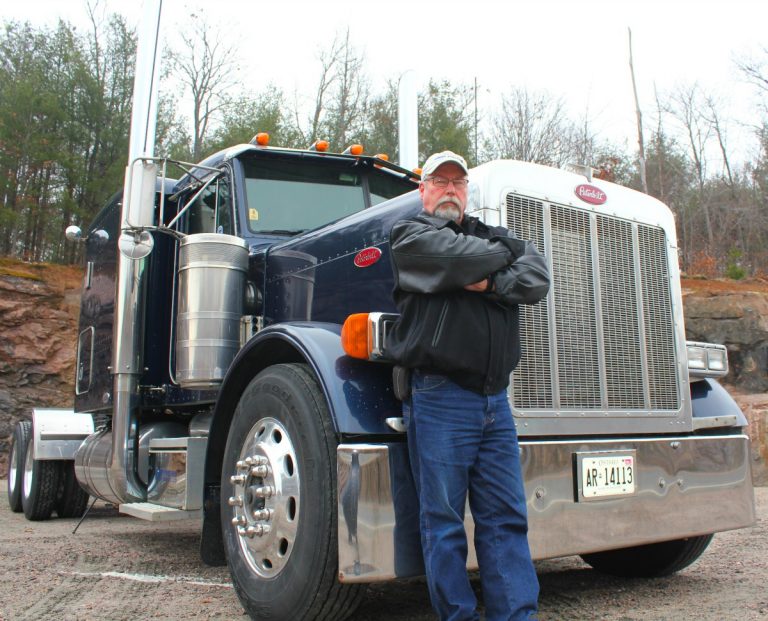
That’s where older trucks—especially high-hood models—have an advantage.
They give you:
- Space to actually get in there to work on it
- Visibility to see what’s going on
- Access to parts without tearing everything apart
That matters more than most people realize.
When you can handle basic repairs yourself, you keep more money in your pocket and more control over your operation.
When you can’t, you’re relying on shop availability, dealership timelines, and rising labour costs.
A Simple Check Before You Buy a Truck
- Open the hood
- Look at the space
- Ask yourself if you could realistically work on it
If it looks tight, buried, and overly complicated, it probably is.
Yeah… It Should Still Look Like Something You Want to Drive
This part gets brushed off, but it shouldn’t.
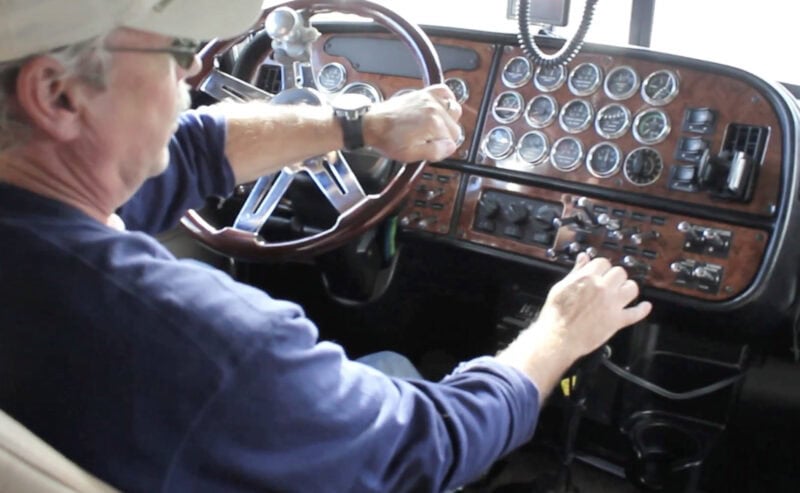
You’re going to spend a lot of time in that truck. Long days, long miles. If you don’t like what you’re driving, it wears on you.
“What’s the point of being an owner-operator if you’re not in a cool looking truck?”
There’s some truth in that.
Pride matters. Not for anyone else, but for you.
And the interesting part is, the trucks most drivers think look the best…..the older, high-hood, classic styles, usually line up with the first two points.
They’re usually…
- More affordable
- Easier to work on
- Built for easy maintenance and real-world repairs
So you’re not choosing between smart and enjoyable.
Most of the time, you can have both.
Where This All Leads
The first truck isn’t necessarily the dream truck. It’s the one that gets you moving.
It’s the one that gives you a shot to build something without being buried in payments or repair bills you can’t keep up with.
Start with something that works. Something you can afford. Something you can manage.
Then build from there.
Because the drivers who last aren’t the ones who start with the nicest equipment.
They’re the ones who make it through the first stretch without getting taken down by the high cost of payments and repairs.