5 Best Caterpillar Truck Engines Ever Built
Caterpillar hasn’t built a highway truck engine in years.
But the loyalty hasn’t gone anywhere.
Cat says more than 1.3 million of its truck engines are still on the road, and the average one is now over 20 years old.
Drivers still brag about Cats that have gone a million miles.
Some buyers shop for an older truck mainly because of what’s under the hood.
So what are the best Caterpillar engines ever put in a truck?
This ranking list is based on what drivers say. It’s not an official lab test.
Here are the top 5, counting down from 5th to 1st.
Why Did Caterpillar Quit?
You’ll hear that the EPA ran Cat out of trucking.
Well, that’s only part of the story.
Emissions rules did squeeze the company.
In 1998, federal authorities went after several engine makers, Caterpillar included,.
It was over software that behaved differently in emissions testing than on the highway. In its settlement, Cat had to meet the 2004 emissions standard by October 2002, That seriously cut its development time short.
That rush is a big reason for the in-between engine drivers call the MBN, which comes up below.
But Cat’s exit was also a calculated business decision.
In June 2008, it announced it wouldn’t build an engine for the 2010 rules. Its 2008 annual report put highway engines at only about 8% of its total engine production.
Cat had far bigger markets in mining, marine and power generation, and that’s where it chose to spend its time and money.
Cat could have built a compliant engine. But they decided it wasn’t worth it for trucking.
The company tried a small comeback with the Cat-badged CT660 vocational truck in 2011. That truck and its engine came from Navistar, not a revived Cat truck line. Cat ended it in 2016.
That decision is exactly why the engines on this list became legends.
Nobody can build new ones, so every good one left is worth more.
The 5 Best Caterpillar Truck Engines
We’re counting down from #5 to #1, so the best one comes last.
#5: The Caterpillar 3408
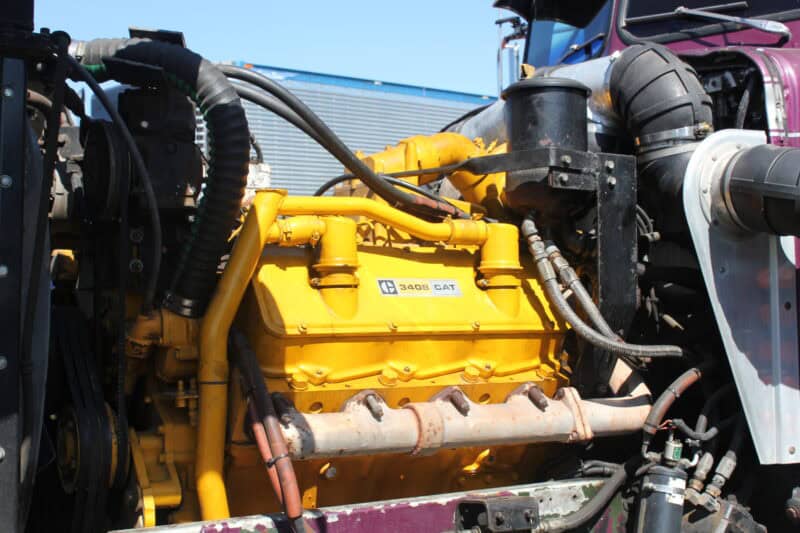
The wildcard. An 18-liter V8. Nothing else on this list sounds or looks quite like it. Depending on the rating, it made roughly 440 to 520 horsepower. It was a heavy-duty favourite in the big conventional trucks of the 1970s and ’80s, and the big cabovers of 1973 were designed to fit it alongside the Detroit 12V71 and the Cummins KTA-600.
Why drivers love it: For the torque, the sound, and the staying power. The 3408 isn’t on this list because of fancy technology. It’s here because it was built to last without giving up performance, and the marine versions are rated for well over 16,000 operating hours, which is roughly two years of running nonstop. It’s all mechanical on the older versions, and a big V8 thumping at idle is hard to beat, just for pure character alone.. It also had a long second life in boats and industrial work, and Cat still makes parts for the marine version, which helps keep rebuild kits easy to find. For a lot of owners, it’s been a good investment.
The not-so-good: it’s big, heavy and thirsty. An 18-liter engine from the ’70s is not going to win any fuel mileage contests, and it’s rarely seen in highway trucks now. One driver called a 1983 3408 in a glider Peterbilt, one of the more rare engines anyone in a big truck would be using today. Fewer people have run one, which means fewer opinions to lean on.
Why it’s #5: It’s a legend, but a niche one. It earns its spot for character and history, not because most drivers would want to run one every day.
#4: The Caterpillar C16
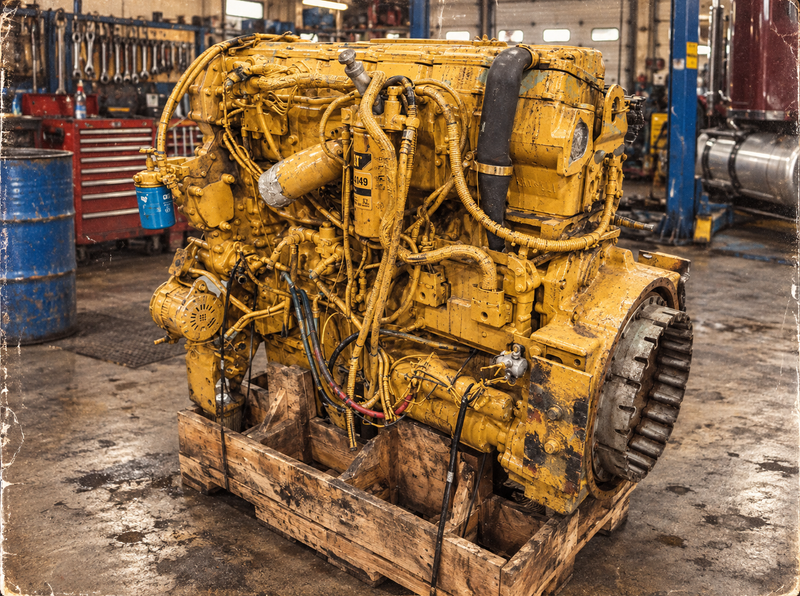
The big-power inline six. The C16 is a 15.8-liter engine, carrying the 7CZ serial prefix. It shares the same block as the 6NZ, but with a longer crank and thinner liners, which is where the extra displacement comes from. Some drivers who know these engines say the 15.8-liter versions made 575 to 600 HP, against up to 550 for the 14.6-liter engines. Ask around and you’ll commonly hear the C16 called ‘a beast‘.
Why drivers love it: A wide operating range and a big torque rise, enough that it works well with transmissions that have fewer gears. That’s the kind of pulling power heavy haul drivers want. It’s also a single-turbo engine, so it avoids the complicated twin-turbo setup of the later ACERT engines. Drivers who’ve run both the C16 and the 6NZ often prefer the C16’s torque. As one driver put it, “horsepower sells trucks, but torque wins races”. It’s a favorite of many Cat fans.
The not-so-good: All that power puts a lot of stress on the oil pumps, and the C16 is loved by many in spite of it. This is also the engine that gets the most arguments. Some owners say it runs hot under hard use. One driver I know claims that a 6NZ at 550 HP can do what a C16 does without running as hot. The thinner liners are where some owners point the finger. Those are owner opinions, not facts, but you’ll hear them. Fewer C16’s were built, too.
Why it’s #4: It’s got big power and a loyal following, but a smaller population and a few doubts keep it below the engines with a longer track record.
#3: The Caterpillar 3406B
The wrench-and-go classic. No computers, no sensors, nothing a truck stop mechanic can’t figure out. The 3406B is the mechanical version of the legendary 3406 family, built before Cat went electronic with the 3406E in 1993. If something goes wrong, you fix it with a wrench, and there’s no laptop or diagnostic software involved.
Why drivers love it: It’s got simplicity, and reliability to go with it. One reseller calls it legendary for its simplicity and reliability, and the most popular of the 3406’s for that reason. In an owner-operator poll we ran on engine choice, the 3406B got more votes than the 3406E or the C15. And in the used-truck world, the engine matters: a 3406B is one of the options that helps a classic Peterbilt hold its value.
It takes a turn-up, too.
My friend Jamie, known as The Lettuce King, built a 1965 Peterbilt 351 hobby truck from scratch, and he chose a 3406B for it. I asked him why. “It fit well in the narrow nose of the truck, and it was just so damned reliable”.
It started as a 400 HP engine, and he has it turned up to around 500, which is a lot of extra power from an engine with no computer in it.
Dave and I never knew anyone who understood engines like Jamie does. He’s a master, so when he picks a 3406B for his own build, that says a lot.
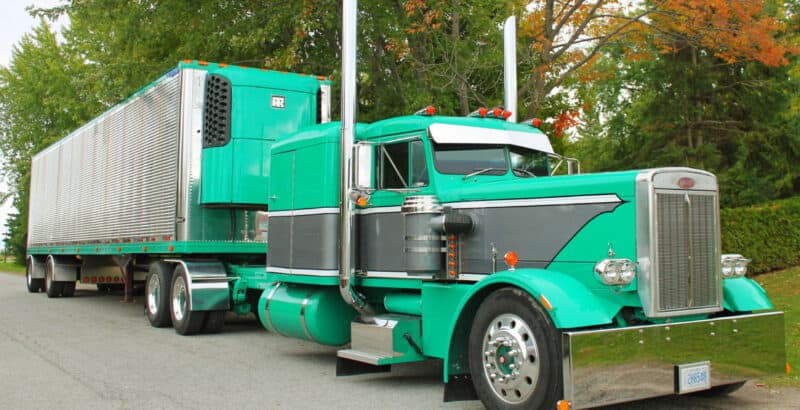
Another driver who owned both a 3406B and a 6NZ said they’d both been great, but you still can’t beat the sound of a 3406B idling.
The not-so-good: It’s an old engine, and that cuts both ways. It can’t match the horsepower of the later electronic Cats. You’ll burn more fuel than you would in a newer truck, and plus the truck wrapped around it has a lot of miles on it too.
Why it’s #3: The love is real, and some drivers would put it higher on this list. It loses ground to the top 2 on power and on the sheer number still running.
#2: The Caterpillar 3406E
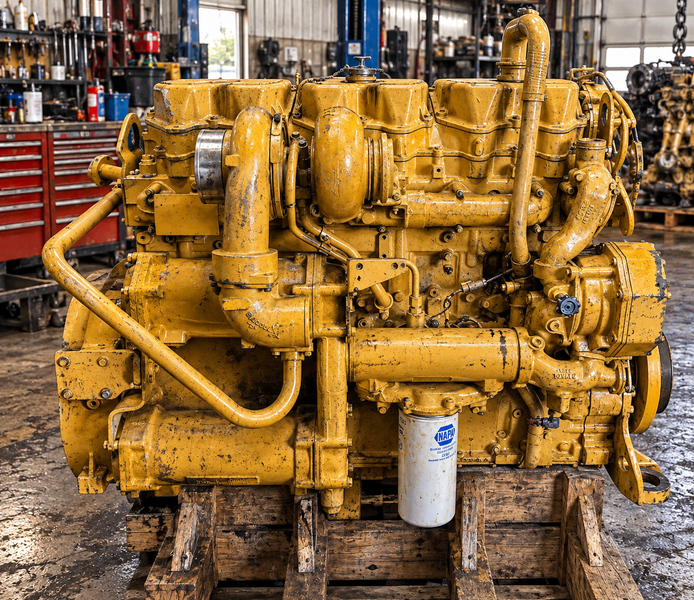
The last of the best. The 3406E was Cat’s first fully electronic heavy-duty truck engine.
It was used in trucks from 1993 to 1999 and mostly came as a 14.6-liter, with some 15.8-liter versions for the 600 HP trucks. A parts dealer sums up its reputation as the “last of the best” before emissions technology got more complicated.
Why drivers love it: It combines real power with the reliability the 3406 family of engines is known for. Many 3406’s have passed a million miles with proper maintenance, and it’s the engine many people picture when they say “Cat.”
The not-so-good: No engine is perfect. The 3 biggest problems on the 3406E (and the C15):
- Oil leaks from the seam between the engine block and the cylinder head. It’s pretty common, and usually more of a nuisance than a complete disaster.
- Top-end trouble. Especially on the older engines, the rocker arms that open the valves can crack from repeated stress.
- Head gasket failure, often caused by a cylinder liner sitting too low in the block. The fix for this means taking the engine apart.
Serial numbers matter too. One reseller says the 5EK prefix is known for oil pan rail cracking, and some 6TS engines had crankshaft problems.
Why it’s #2: It’s right behind the 6NZ. Drivers think just as highly of it, but it’s not quite as simple to work on, and fewer people are hunting for one today.
#1: The Caterpillar C15 6NZ
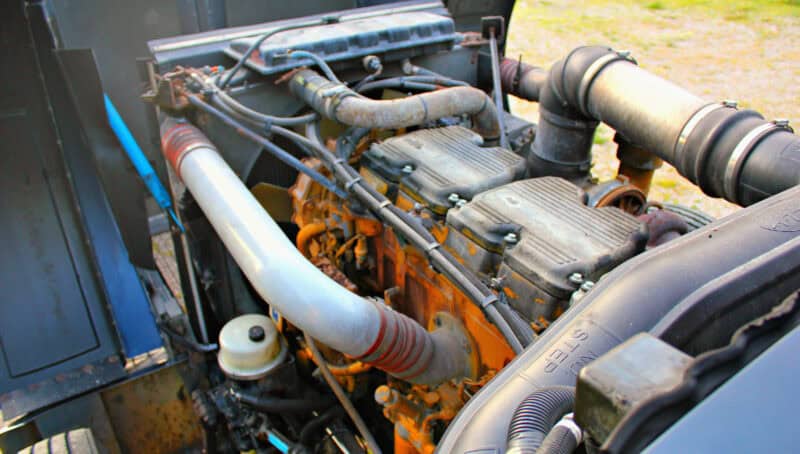
The Legend. The 6NZ is the engine drivers mean when they say a truck has “the Good Cat.”
It’s a single-turbo, 14.6-liter inline six with electronic injection, built before the particulate filters and complicated exhaust systems of the later trucks. People call it “pre-emissions,” though it still had to meet federal standards. What they mean is that it’s simple enough for most shops to work on, and parts and rebuild options are relatively easy to find.
Why drivers love it: Dave knew these engines first-hand. He ran a 6NZ, then ordered another brand-new 2004 truck with a 475-horsepower Cat 6NZ because he wanted a dependable truck, not top speed.
He never felt the need for more power. He ran Nebraska and Wyoming headwinds and mountain grades, and that Cat kept pulling when other trucks he’d run slowed down. He admitted it cost him some fuel mileage, but fuel was cheap back then. That second engine went past a million miles with no trouble. Careful maintenance gets much of the credit, but the C15 engine earned it too.
Resale value is part of the legend. Dave pointed out that big Cats have long held their value better than most engines. Plenty of owner-operators take pride in their trucks, and some buyers go looking for a clean older Cat specifically. He also liked that an older Cat can often be worked on at the side of the road… meaning it truly needed not much else other than a wrench to work on it.
The not-so-good: The C15 family has a confusing history. After the 6NZ came the MBN, a stopgap engine Cat built as it rushed toward ACERT. Some drivers say MBN stands for “Much Bad News,” with complaints about response and fuel use. Dave’s MBN went past a million miles and pulled just like the 6NZ he’d owned before. Opinions differ, and both can be true.
The ACERT engines that followed use 2 turbos and a different design, and some owners find them more expensive to keep running. Dave remembers one replacement turbo costing more than $7,000 in parts alone. Later versions with particulate filters drew complaints from some owners about regen problems and downtime. The C15 also shares the oil-leak and head gasket issues.
Why it’s #1: Simplicity, pulling power and a loyal market all come together in one engine. It’s not perfect, but a well-kept 6NZ is the one most drivers still measure other engines against.
Long Live The Big Cats
Cat may be done building truck engines, but these 5 engines are still working, still getting rebuilt and still wanted.
Take care of any of them and they’ll keep running long after the company that built them left the trucking business.