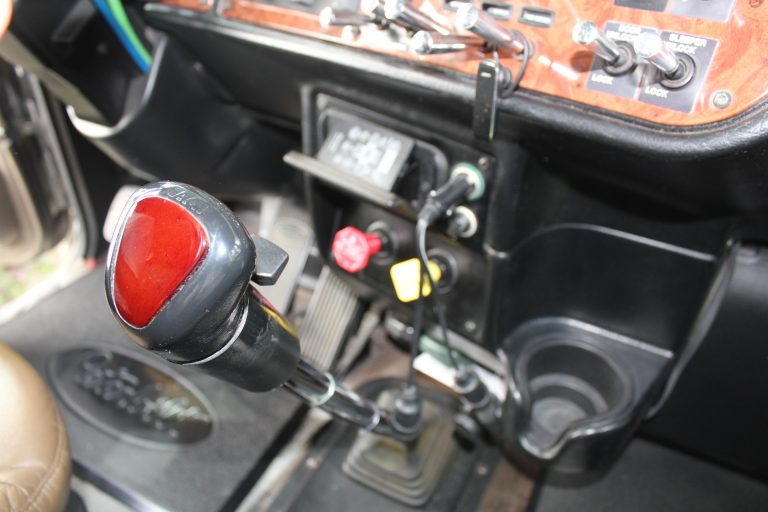
Winter Driving Tips For the Trucker: Mastering The Freeze
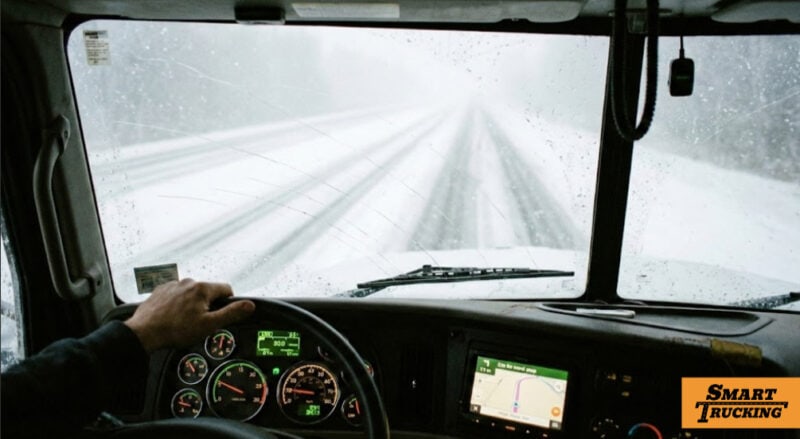
Driving a tractor-trailer in winter is a whole different ballgame.
Snow, ice, and frigid temperatures turn routine routes into high-stakes challenges.
Success isn’t just about experience—it’s about knowing your limits, adjusting your driving style, and making smart decisions every mile of the way.
Even the most seasoned truckers know winter weather is unpredictable.
Poor traction, longer stopping distances, low visibility, and other drivers’ mistakes make each journey a test of skill and patience.
Understanding and applying solid winter safety strategies separates the pros from the rest of the pack.
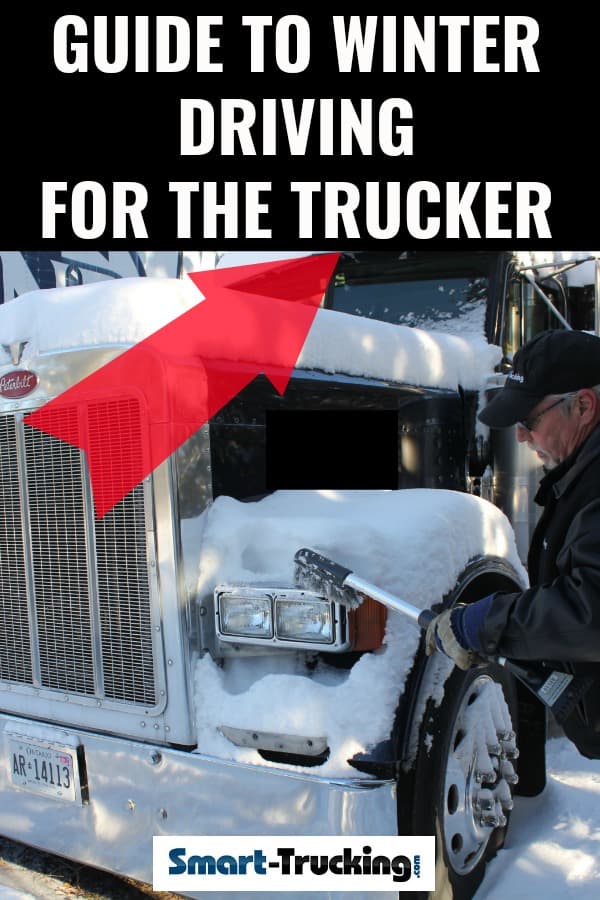
1. Mindset Matters: Winter Driving Requires Focus
Winter trucking isn’t just about reacting: it’s about anticipating.
Your mind must shift from “routine driving” to “heightened awareness.”
Assess road conditions, plan your maneuvers, and always consider what could go wrong. A lapse in judgment or unpreparedness can turn a small mistake into a serious accident.
Critical Thinking Tips:
- Safety first, schedule second. Never risk anything to meet a delivery deadline.
- Recognize when road and weather conditions are too dangerous and it’s time to park that truck.
- Approach every maneuver with patience and precision. Overconfidence can be deadly.
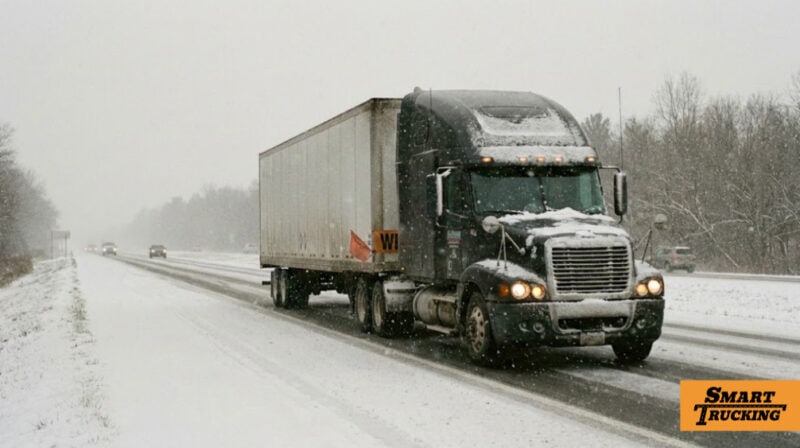
2. Adjust Your Driving Style
Snow and ice demand different driving techniques.
Your reaction times need to be quicker, and your truck will respond more slowly. This means planning every move carefully:
- Slow down: Legal speed limits are often too fast for icy roads. Take your time—speed kills.
- Maintain a safe buffer zone: Keep distance around your truck, in front, behind, and beside, to allow room for mistakes, both yours and others’.
- Avoid tailgating: Visibility can vanish in heavy snow. Following tail lights too closely is a recipe for disaster.
Patience and foresight are your best allies on winter roads. Treat snow and ice with respect, and plan every move with extra caution.

3. Master Maneuvering and Skid Control
Winter roads will kick your ass if you make sudden movements.
Knowing how to handle skids and maintain control can save your truck and more importantly, your life and the lives of others.
- Steer gently: Sharp turns on slick surfaces often lead to jackknifing.
- React calmly to skids: Engage the clutch, steer lightly in the direction you want the front of the truck to go, and release the brakes to restore traction.
- Practice in safe conditions: Familiarity with these techniques before facing real-world hazards builds confidence and muscle memory.
Finesse beats force on icy surfaces. Smooth, deliberate inputs are your best defense.
Related > 7 Critical Mountain Driving Tips For Truckers
4. Equipment and Load Management
Before setting out, make sure you and your truck are ready for winter:
- Tires: Properly inflated with sufficient tread.
- Brakes: Check thoroughly; frozen brakes can sabotage stopping power.
- Lights & defrosters: Ensure they work and are free of snow or ice.
- Air tanks: Empty moisture to prevent freezing.
- Load: Secure cargo to prevent shifts on slick turns.
A well-prepared truck is the foundation of winter safety.
Don’t underestimate the impact of cold on your equipment. Never forget driving in the winter has it’s own set of rules.
Related > How to Handle a Jack Knife Skid – Trucker Safety Tips
5. Emergency Preparedness
Winter can surprise even the best-prepared drivers.
Pack an emergency kit with a minimum of the following:
- Warm clothing: insulated boots, heavy gloves, thermal socks, hats that cover your ears, layered coats, and waterproof outerwear.
- Blankets or sleeping bags: enough to stay warm if stranded for hours or overnight. Consider compact emergency blankets as backups.
- Non-perishable food and water: high-energy snacks (nuts, jerky, granola bars), canned meals, and at least a gallon of water per person.
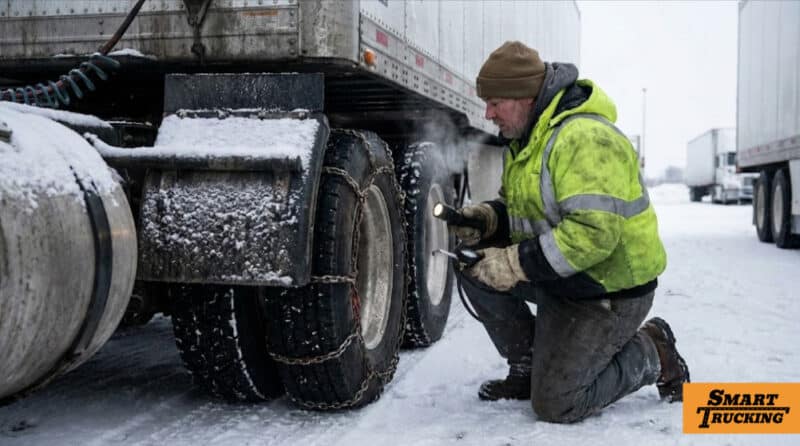
- Tools: hammer, putty knife, windshield scraper, broom, tire chains, adjustable wrenches, duct tape, and a flashlight with extra batteries.
- Fuel additives: diesel conditioner to prevent gelling, methyl hydrate for extreme cold.
- Vehicle extras: spare fuel filters, extra washer fluid, tow straps, jumper cables, and a basic first aid kit.
- Communication & navigation: fully charged phone, power bank, GPS device or maps, and a whistle or signaling device for emergencies.
Visibility and warmth are critical, but being able to maintain your truck and survive being stranded is equally important. Being prepared for the worst can save your life.
6. Decision Making in Severe Conditions
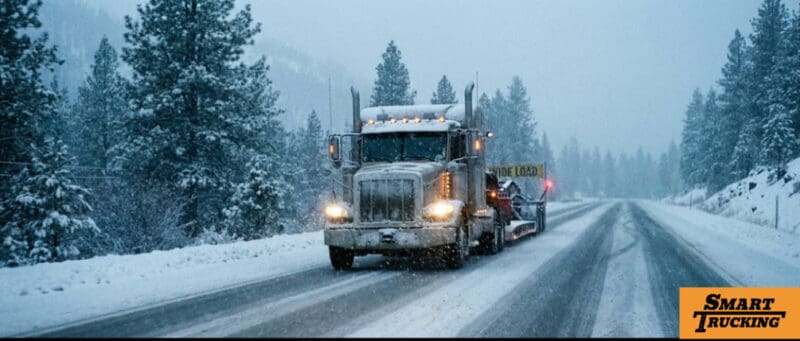
The smartest drivers know when to hit the brakes, both literally and figuratively.
- Stay parked if needed: Waiting out a storm isn’t weakness. It’s professional discretion.
- Assess conditions: Check weather reports, road alerts, and your truck’s performance. Only drive if confident in your truck and your ability to handle it.
- Drive cautiously: If you must go, reduce speed, increase following distances, and anticipate sudden hazards.
Winter driving isn’t a race. It’s a test of judgment and restraint.
Related > 10 Truck Driving Safety Tips Every Professional Driver Should Follow
7. Make Every Stop Count
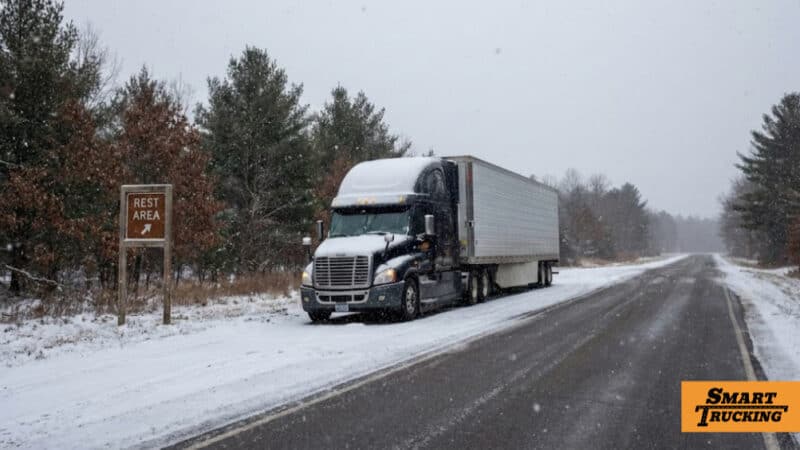
Every stop is an opportunity for a safety check:
- Lights & visibility: Clear snow and slush from tail lights, license plates, windshield, and mirrors.
- Tires & brakes: Check for freezing or ice buildup.
- Trailer: Ensure wheels turn freely, and brakes are not frozen to the drums.
- Washer fluid: Top off for clear visibility.
Quick checks like these prevent mishaps before they happen. In winter, vigilance is your constant co-pilot.
8. Final Thoughts: Safety Over Schedule
Every snow-covered mile demands respect.
A single misstep can turn a routine run into a disaster.
Your commitment to safe driving, careful decision-making, and preparedness ensures that you and everyone else on the road make it home safely.
Winter trucking isn’t easy, but with the right mindset, driving techniques, equipment checks, and emergency planning, you can navigate the harshest conditions with confidence.
Remember. Arriving safely without incident is always worth more than arriving on time.
More Related Articles
- 10 Tips to Maintain Traction on Slippery Grades All Truckers Should Know
- Getting Your Class A CDL License – Simple Steps to Becoming a Trucker
- 7 Tips to Avoid A Skid in a Big Rig
- CDL Truck Driver Skills – Tips, Tricks + Knowledge to Kick Your CDL Skills Up a Notch!
- 5 Best GPS For Truckers – A Guide For the Professional Driver