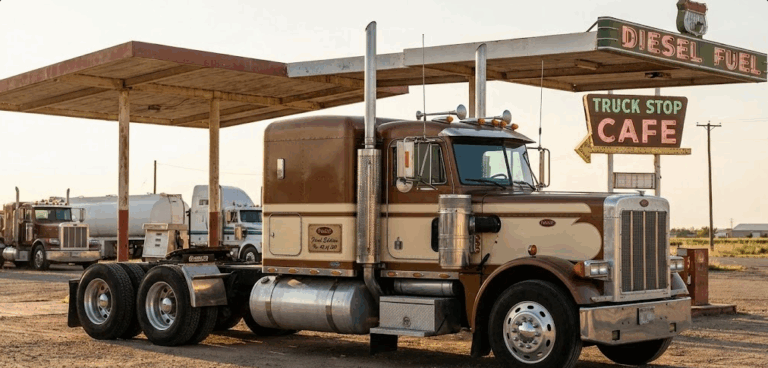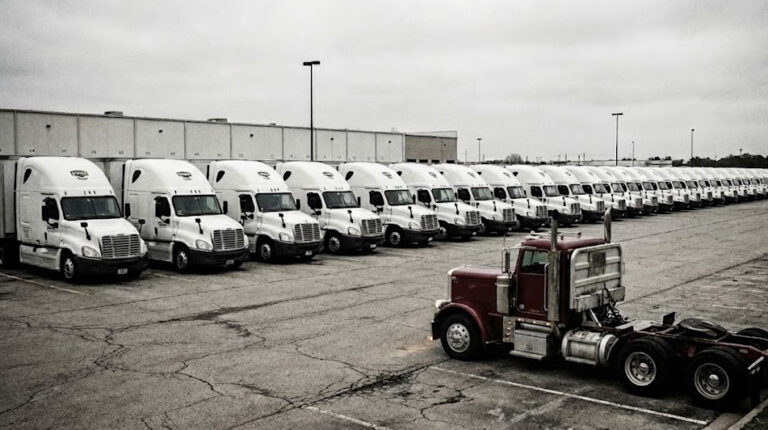
What Every Trucker Needs to Know About Long Wheelbase Trucks
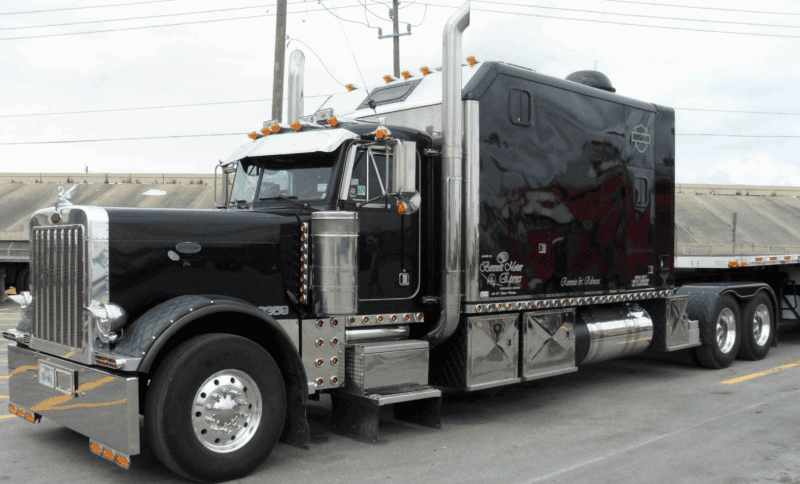
As an owner operator, success starts with knowing your truck inside and out and up and down.
Long wheelbase trucks are defined by the distance between the front axle and the drive axles. They have become increasingly popular for exactly that reason.
The ride is comfortable, they are stable and also thought to be quite ‘stylish’ in trucking.
But they also demand respect and understanding.
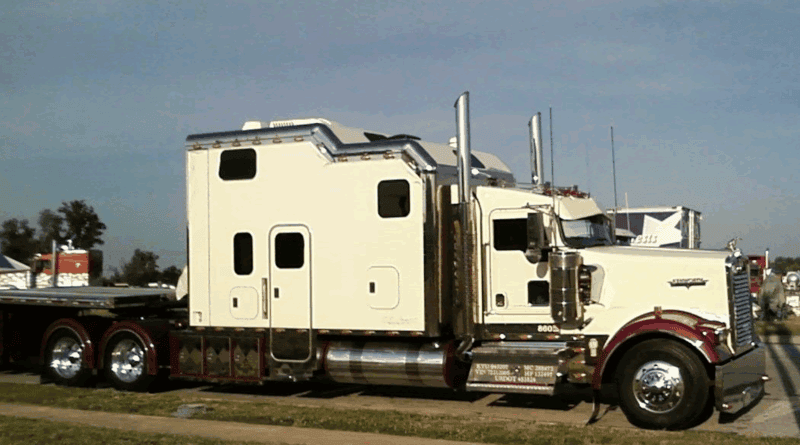
Whether you’ve been driving for decades or you’re still finding your groove as a new driver, knowing how a long wheelbase truck behaves matters. A lot.
These trucks come with real advantages as well as challenges that only show up in the practical application when you’re on the road, on the job.
In this post, I’ll go through:
- what exactly is wheelbase?
- how regulations brought about modern truck design
- and what drivers actually experience when running extended wheelbases in the real world of trucking
Understanding Wheelbase (And Why It Matters More Than You Think)
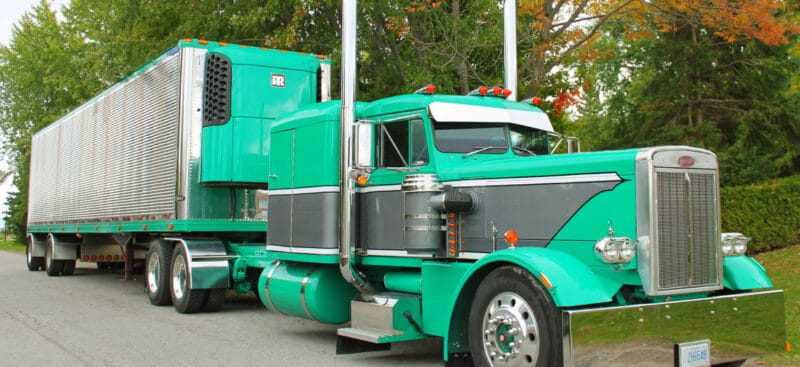
Wheelbase is one of the most important measurements on your truck.
It directly affects…
- ride quality
- turning radius
- weight distribution
- and overall handling
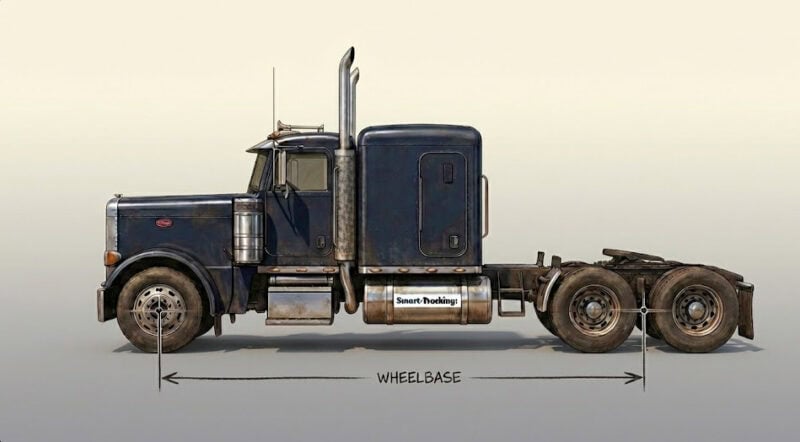
To measure wheelbase correctly…
- Locate the center of the front axle
- Find the mid-point between the drive axles
- Measure the distance between those two points
It helps to think of wheelbase as your truck’s foundation.
It determines how smoothly the truck rides, how tight it turns, and how weight is carried across the axles.
“I used to think they were non functional, but you have so much swing dip clearance when backing up… it’s about finding the right balance.” — @rd5991
Getting this measurement right matters for:
- Proper weight distribution
- Predictable turning radius and behaviour when making a turn
- The frame strength and durability
- Trailer swing-dip clearance
When you know your wheelbase, you can make better decisions at scales, docks, fuel islands, and on routes with tight access.
How Regulations Created the Long Wheelbase Truck
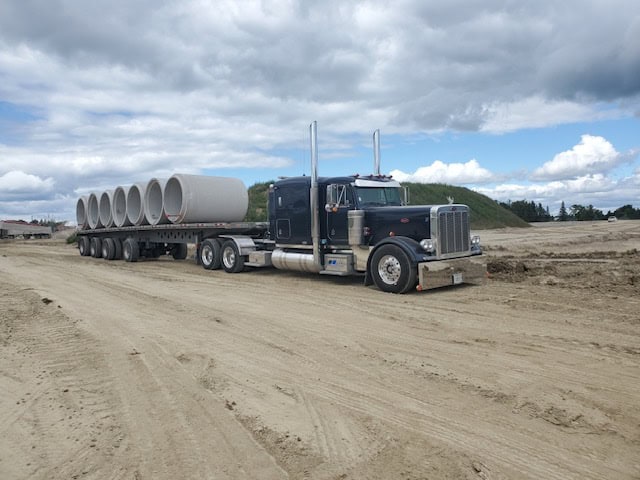
Before the late ’60’s, tractor-trailer combinations in the U.S. were capped at an overall length of 55′.
When trailer lengths increased, something had to give. That “something” was the tractor.
- The space in the cab shrank.
- Ride quality suffered.
- And driver comfort went downhill, so as the regulations could be met.
By around 1970, federal regulators realized they had a big problem.
They decided to eliminate overall length restrictions and then allowed states to regulate trailer length.
That one decision changed trucking forever.
Manufacturers could finally build better trucks.
Trucks were being built with……
- Better ride quality
- Larger sleepers
- Improved airflow and cooling
- Increased space between tractor and trailer
These changes weren’t just about luxury. It was about remembering and respecting that truck drivers were human beings and the long haul trucker needed more comfort.
The Real Advantages of Long Wheelbase Trucks
A longer wheelbase truck rides a whole lot smoother on rough roads. Before air-ride suspensions became common, wheelbase length was one of the few ways to reduce a rough ride for the driver from rough roads.
Longer wheelbases also allow for bigger sleeper berths.
Some bunks run up to 130″… kinda like an apartment on wheels. But for long haul drivers, that space is where they live when on the road for months at a time.
Longer trucks also feel more stable and solid at highway speeds.
- They track nice and straight.
- They handle the wind better.
- And overall, they make for a more pleasant ride (which is of great importance to a driver who spends 10+ hours in the saddle in a day.)
The Trade-Offs Drivers Don’t Always Expect
But, long wheelbase trucks come with baggage.
High-Siding
High-siding is a real issue.
Steep driveways, loading docks, and sharp crests can leave fuel tanks hanging up because the drive axles sit farther back.
It can be pretty expensive and also embarrassing, when you rip up one of your fuel tanks.
Fuel Economy Suffers
Fuel economy also takes a hit.
The extra weight and length of the frame and the extra drag all add up.
When fuel was cheap years ago, drivers shrugged it off.
But with today’s diesel prices, the extra cost can really hurt.
Maneuverability
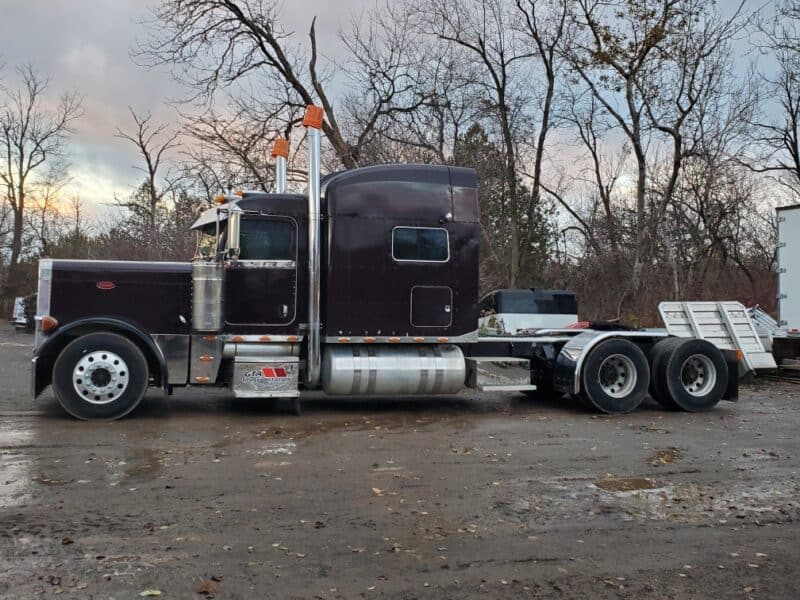
Maneuverability is another reality check.
Tight spaces in truck yards, city docks, and awkward customer locations require more planning and a lot more patience.
“I’ve had deliveries and pickups I barely fit in… if I had a needlessly stretched truck, I wouldn’t have fit many places I’ve been.” — @superfamilyallosauridae6505
“If the area is made for the standard truck it is literally impossible… you have to wait till he’s done and pulled out to get out.” — @xaviercharles9462
“I’d like to see one of these back into a blind alley in downtown Chicago.” — @RedeyeW900
Some drivers buy extended wheelbases for looks, then end up paying thousands of dollars to shorten the frame later.
Weight is the silent killer
The longer wheelbase trucks with longer frames sometimes need inserts to prevent flex…. and those inserts add more weight.
Some long wheelbase tractors tip the scales at 30,000 lb when empty, which will seriously limit payload.
Long Wheelbase Trucks in the Real World
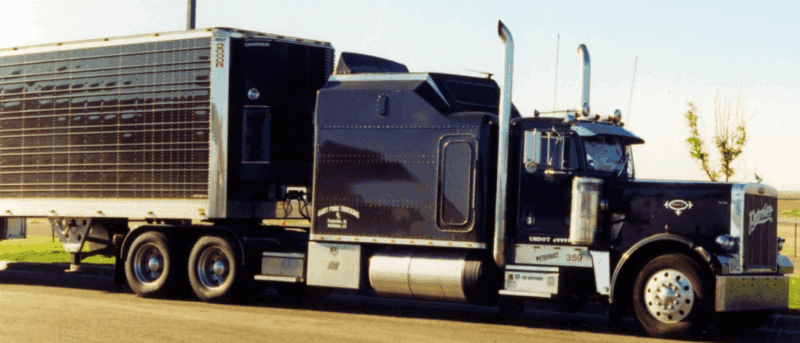
Scaling
Scaling can be a real headache with an extended wheelbase truck.
While long wheelbase trucks often keep steering axle weights under control, many private scales aren’t designed for them.
It then becomes necessary to scale the truck, axle by axle, which can be a real pain in the butt.
Frame Flex
Frame flex is another problem. The longer the frame, the more reinforcement it needs under heavy loads. Inserts will certainly solve the problem but they add weight and definitely aren’t cheap.
“Long wheelbase would be far less maneuverable backing up a dump trailer… just couldn’t go where I go sometimes.” — @trigremlin
“I used to think they were non functional, but you have so much swing dip clearance when backing up… it’s about finding the right balance.” — @rd5991
If You Are Spec’ing a Long Wheelbase Truck, You ‘May’ Want to Add a Window
The extra length in the frame allows the rear window in the sleeper to be used when blind-side backing.
It is a small advantage, but one you won’t get with a short wheelbase truck.
Ideal Wheelbase Specs (Before You Spend $$ Fixing a Mistake)
Your wheelbase choice should match your application, what you NEED, not your ego.
- Trucks pulling 53′ vans: 220″–235“
- Long-hood conventionals: 260–280″
- Flatbeds: longer wheelbases work well due to overhang flexibility
- Long haul/OTR Owner Operators. 300“+ for 120″–130” sleepers
Be sure to account for fifth-wheel slide travel and trailer swing-dip clearance.
If you get it wrong, and you could be looking at $6,000–$8,000 in frame mods to fix it.
“I’ve run a lot of different wheelbases on trucks… I stand by my thought the song ‘Give me forty acres’ was written about a Kenworth W900.” — @690_5
Just a Final Word from the Driver’s Seat
Long wheelbase trucks can be incredible trucks.
They’re comfortable, they’re stable, and built for a life on the road.
But they demand high level driving skill, planning, and a lot of honest self-assessment.
The best truck isn’t the longest one. (Although I don’t think the Lettuce King would agree with this statement)
“It’s all about balance. 280–290 works for what I do. Not the easiest to navigate but definitely not the worst.” — @MoMan.88
“If you are an especially skilled and experienced driver, I can see it being practical. For most drivers, I would say no.” — @williamainsworth2256
“They look great, but turning is no fun.” — @usfarmcop
“If it’s all stretched out and the front bumper is dang near touching the ground it’s a show truck not a work truck… not saying it doesn’t look cool, just not meant for working.” — Anonymous Owner-Operator
So, spec it smart.
Drive it smarter.