Big CB Radios: Trucker Culture That Faded Away
“The history of the CB radio is more than dates and models. It was the roar and crackle in the cab that broke the loneliness of the miles. A big radio wasn’t just equipment. It was your lifeline, your entertainment, and your connection to a brotherhood on the highway.“
There was a time when truck drivers weren’t guided by apps, GPS, or constant notifications.
There were times when finding your way on a trip was all about reading a road map, looking out your window at the weather and listening to voices giving information as it crackled across the airwaves on the CB.
Yes, at the heart of it all was the CB radio.
A small but powerful device that changed the way truck drivers worked, traveled, and connected.
For many, the magic wasn’t in your standard 4 watt radio.
It was in the “big radios”…. those high-powered machines that could reach hundreds of miles, if the terrain, weather, and a little bit of luck all lined up.
They weren’t just another piece of equipment.
They were a way of life for most truck drivers in the ’70’s and the ’80’s.
History of CB Radio: From WWII to the Interstate Era
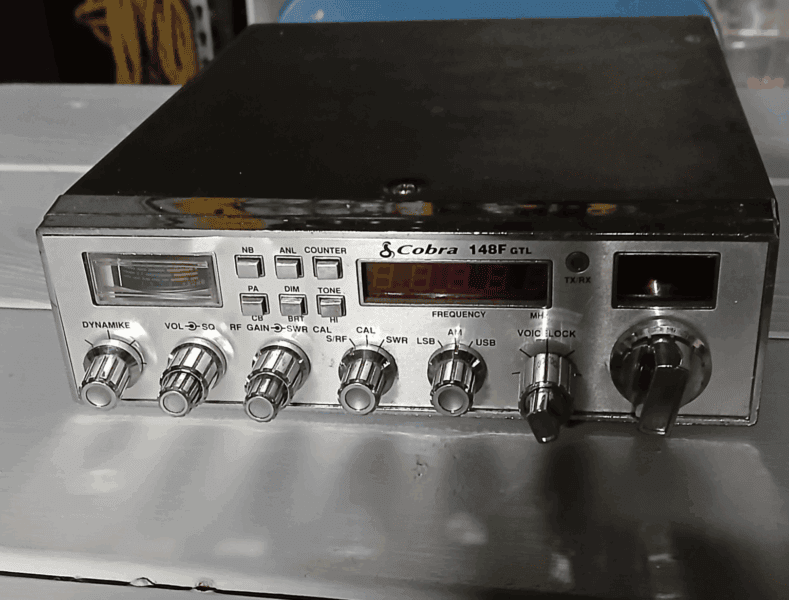
CB radios started their life far away from the highways of America.
It was during World War II that the military needed short-range communication tools in Europe. And that’s when the CB came to be.
After the war, the FCC released the technology to the public, and by the late 1940’s, CB radios were available to everyday American.
Truckers were truly the first group to latch onto this new ‘CB’ thing.
At the time, the Interstate system wasn’t complete.
Trucking in those days meant long stretches of 2 lane roads, small towns, and unpredictable road and weather conditions.
CB radios gave drivers eyes and ears where there were none:
- They could reporting police presence (“bear in the air”)
- They could checking when scales and weigh stations were open (“the chicken coops”)
- They were able to warn other drivers of bad weather, accidents and other hazards.
- They could connect with other truckers on the same route.
And one of the best things about CB’s at the time, they were cheap. In fact, a basic setup cost only about $50.
For working drivers, it was high ‘tech’ in the day, and tech that most any driver in the day could afford.
mr.duckplucker5353: “Been on the CB since late 1970’s. Base stations and had them on all my vehicles. CB is the glue that binds us Truckers together. An indispensable tool and trusty companion to make the time go by faster on the road… A CB radio increases your situational awareness. Avoiding pile ups, speed traps, etc. And so what if there’s salty language? The CB Radio lives on.”
For a full guide to the CB lingo drivers use, check out Smart Trucking’s CB Lingo Guide
The CB Boom: Pop Culture, 23 Channels, and Truck Stop Shops
By the 1960’s and 70’s, CB radios had exploded in popularity.
Movies like Smokey and the Bandit and Convoy made CB culture a national sensation. Families, campers, and long haul drivers, all wanted a piece of the action.
The early radios had 23 channels.
The range was limited, but on a good day, the range could be up to a mile or two.
Because of the demand, the FCC expanded to 40 channels.
This gave drivers and driver groups, more privacy, and more opportunities to communicate.
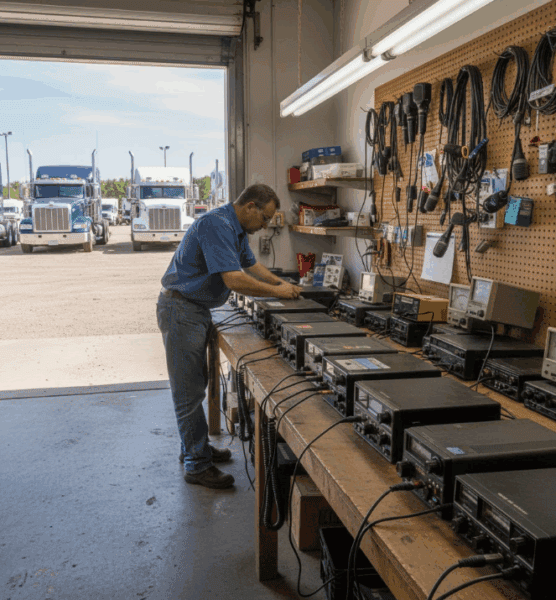
Truck stops with CB shops started to pop up, staffed with ex-military, who know how to tune up those big radios to get the best performance.
With a few simple tweaks, a stock 4-watt radio could be pushed up to 7 watts, which extended the range of the radios range significantly.
379Pete: “Having a CB in the truck is just as important as having fuel in the tanks. Don’t understand how you could not have a CB.”
Remembering ‘The Big Radios’: The Power Players
As the CB culture of the day matured, the “Big Radios” emerged.
These weren’t your standard everyday ordinary CB’s.
These were high-powered radios, sometimes with external amps (“boots”), 50 watts of power or even more, which could reach 100 – 200 miles on a good day.
Some hardcore operators pushed 500 – 1,000 watts, turning their trucks into rolling broadcast stations. And don’t forget, this was ‘way’ before the cell phone days, so having contact with another driver who was hundreds of miles away, was a pretty big deal!
Some of the popular Big Radio setups included:
- President Grant 50-watt CB with 250-watt booster using push-pull amplification
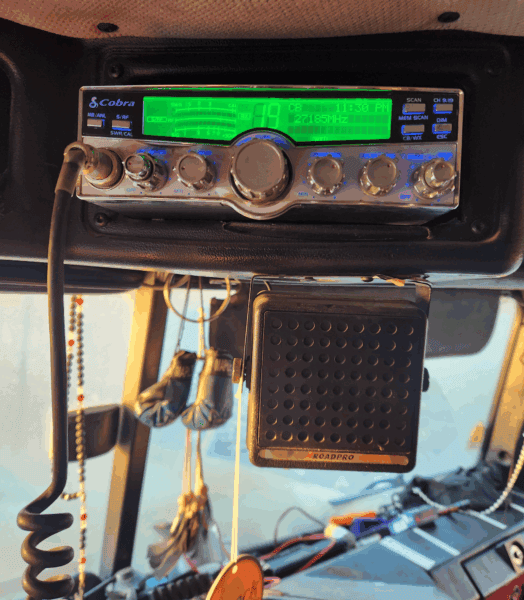
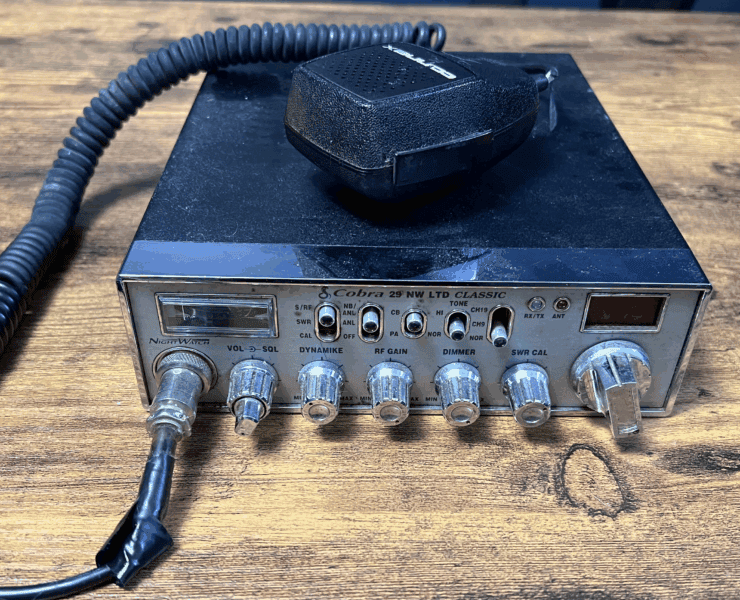
- Cobra 29 LTD for reliable, moderate-range communication
- Galaxy and Stryker models for serious long-haul talk (Smart Trucking CB reviews)
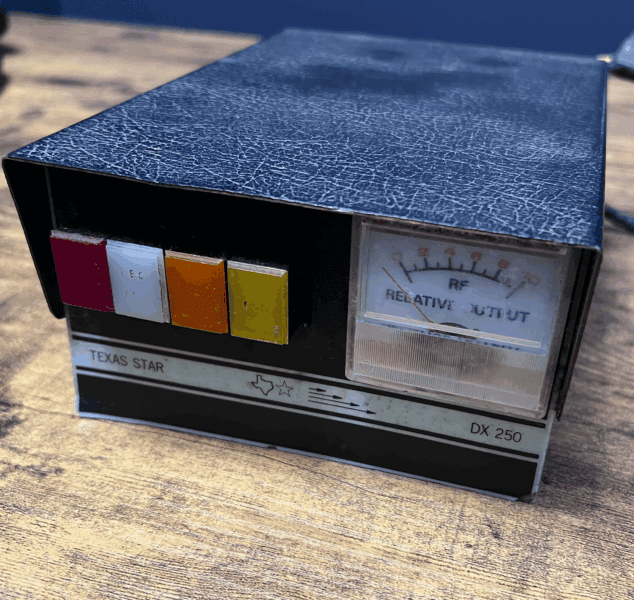
Texas Star ‘Boot’ (or Amp)
Dave, Smart Trucking: “I remember cruising through southern Utah when an old trucker came barreling toward me. Every time he keyed up his CB, his trailer lights would dim from the sheer power that radio was drawing. I can just picture him near St. George, talking to someone all the way up in North Dakota through that high-powered box. Stories like this are part of the history of the CB radio… just a reminder of just how powerful these big radios were and how they kept truckers connected across the miles.”
Yes, drivers used these radios for fun but they were also tools that saved both time and lives.
Channel 19 remained the universal highway channel for:
- Law enforcement alerts
- Traffic backups
- Weather warnings
- Road hazards
At the same time, many drivers had private frequencies (channels) to talk within their groups, free from interruptions.
With both public and private channels , there was a huge network that created a highway community, alive with voices, CB handles and lots of crackle.
donlum9128: “On interstates, they are a safety tool. It is important in slowing traffic approaching accident locations. “
RCRCustoms: “When I’m running up the Trans Labrador Hwy you have to run on CH10 and keep the volume up, there’s no cell service… it’s 400+ miles of dirt road through the Boreal Forest with mountains and valleys and no way but with a CB radio or satellite phone to get help when you need it.”
The Rhythm of the Road: Safety, Dock Calls, and Real-Time Road Reports
Life on the road in those days, definitely revolved around the CB.
- Produce sheds in California called drivers in over the air.
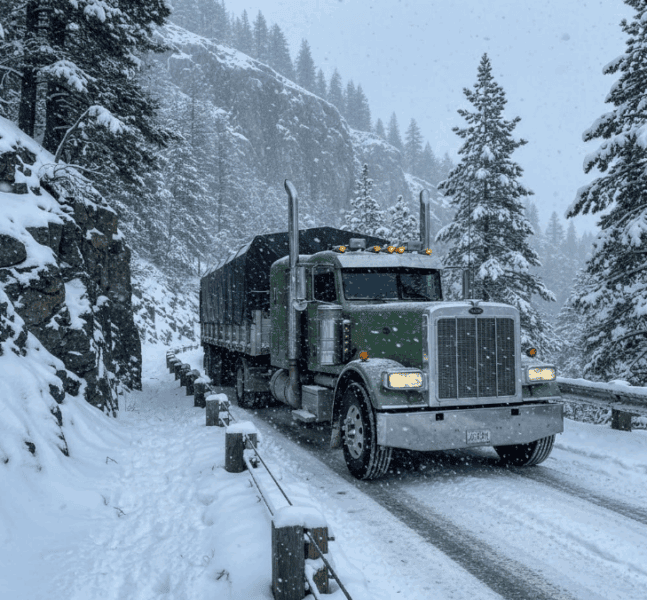
- Chain law updates on Donner Pass allowed quick decisions to whether to reroute or chain up.
- Backhauls from Salinas, tricky receivers, and unknown towns became manageable with the CB.
Drivers could share real-time road reports.
- Black ice and slick spots
- Accidents and pileups
- Traffic stops and hazards
Before cell phones and GPS, these reports were what kept the roads safe.
One snowstorm story sticks out: “a whiteout with a trailer sideways across I-80. … and thanks to a CB warning, the driver slowed in time, avoiding a second accident.” (Dave, Smart Trucking)
kevinlesch9656: “A neighbor of mine was in a big whiteout pile up… first one told the one behind to hit the median over CB. They were the only 2 vehicles in that 50+ pile up without a scratch. Cars and trucks within inches of them but no damage!”
markanderson8348: “I was very happy coming from the oilfield to see the OTR company I came to had CBs in every truck. It has saved me so many times already on I-80. I will always have one even if I have to buy it myself.”
Fighting the Loneliness of the Road
Long-haul trucking can be lonely. Just ask any OTR driver.
In times before there was reliable AM/FM reception, cassettes, or 8-tracks, CB’s kept drivers’ company.
Conversations with friends or strangers who became friends, helped to pass the time, made the miles feel shorter…..sometimes turned into lifelong friendships.
Some of the handles of the day (nicknames) became legendary: Chinaman, Treetop, Side Winder, Captain Hook, Magic, Chain Drive and CB Rambo are just a few.
Each driver on the radio had a personality, a voice, and a story to tell. But then have you ever met a trucker who DIDN’T have a story to tell?
CB’s provided some humour, camaraderie, and even mentorship across the miles.
LampLighter: “After being absent from CB radio for 40 years, I’ve just purchased a brand new 40 channel SSB President Mckinley CB radio. I miss those good’ol days! Hoping to see a huge revival!”
peterohmart5954: “CB radios… it was a tool, not a toy. I miss that part of trucking. My story: I got stuck in snow with 10,000 lbs of propane… county sheriff sent a message to all snowplows. Without the CB I would’ve been stranded longer. Extreme kindness from strangers, all thanks to communication.”
(Image Placeholder: Two trucks passing each other on a desert highway, microphones keyed up.)
Trucker Activism in the ’70’s
The CB wasn’t just a toy and a place to shoot the breeze with your friends.
It gave truckers a voice that could extend across many miles of highways.
During the 1973 oil crisis, rising fuel prices and the new 55 mph speed limit hit independent drivers hard.
Drivers used their CB’s and organized work stoppages and protests. Their goal was to force officials into addressing high fuel surcharges and fuel distribution at truck stops. This act of rebellion truly helped to lock in the role of the CB in trucker culture and in American history.
Antennas, Skip and Signal Magic
Power wasn’t everything.
The antenna that was used, how it was mounted and the coax quality would determine how far and clearly a signal traveled.
Antennas were often mounted on mirrors and extended range forward and back. Fiberglass whips like Firestik were durable and easy to tune.
Heavy coax prevented blown finals when some outfits ran higher wattages.
Ever heard of the expression, “Skip”? This was the term drivers loved.
It was the radio waves bouncing off the ionosphere, allowing the drivers to carry on conversations across states or even countries!
Nights when skip was rolling were magical!
Tyler-xe1es: “Ain’t no one even know how to use these things anymore besides a few select. It’s a shame because they are a very handy tool to have!”
(Image Placeholder: Nighttime cab interior with CB radio glowing, highway in background.)
Why CBs Still Matter
Even with all the noise, the nonsense and the squelch, CB’s have their place in trucking They provide:
- Early warnings for whiteouts, black ice, and accidents
- Directions and co-ordination in remote areas
- Communication for industries like logging, produce, and asphalt crews
Filtering out the noise is simple…. just takes some squelch adjustments, volume control, and selective channel use.
Even modern day truck drivers who rarely key the mic can benefit from keeping one ear on the CB.
oldman975: “One of these new school rookies… said he’ll never use a CB because he has a smart phone. I told him if I ever saw him trying to pass in a closed lane… I’d personally run him off the road. I have a CB in my pickup and it’s always on.”
michaelsorrentino7409: “I keep a spare CB under the bunk in case my big radio goes out!! Saved my ass many times!!”
MolonFrikenLabe: “Don’t forget that a function on almost any CB is a public address system. Add an amplifier and a couple of PA speakers and you can, well maybe encourage road workers to complete their given task in a timely manner.”
The Decline of the CB
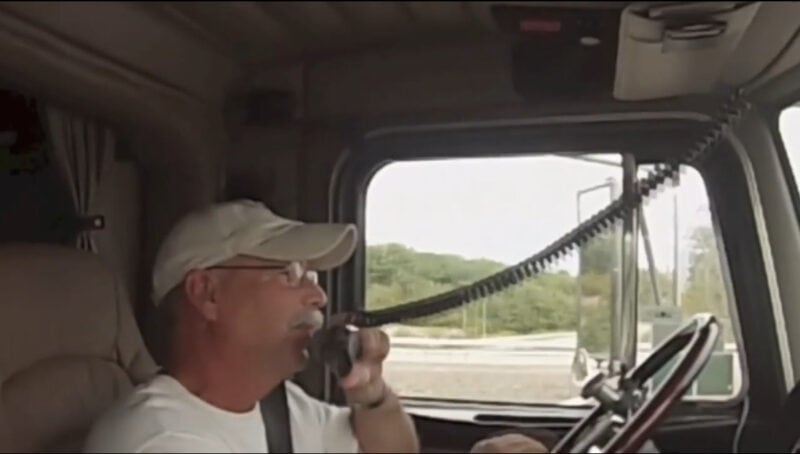
As cell phones, GPS, and modern truck equipment advanced, the CB slowly started to fade away.
The truck stops that were once filled with noise, solicitation, and casual chatter, have gone quiet.
Yet the memories linger.
Many drivers keep a CB above their head, sometimes not for use, but for connection, nostalgia, and a reminder of a bygone era when the road was alive.
mrjefery1: “I did not run one for almost 7 years. But after this last winter I decided to break down and get one… If I talk on it at all I am just talking to myself, hell I can leave it on all night and it never goes off and wakes me up.”
Roscoe66ify: “I wouldn’t even think about being out here with a radio off. Anybody out here who doesn’t use or have one is extremely foolish, doesn’t matter if they’ve been trucking for many years.”
The Era That Shaped Trucking Culture
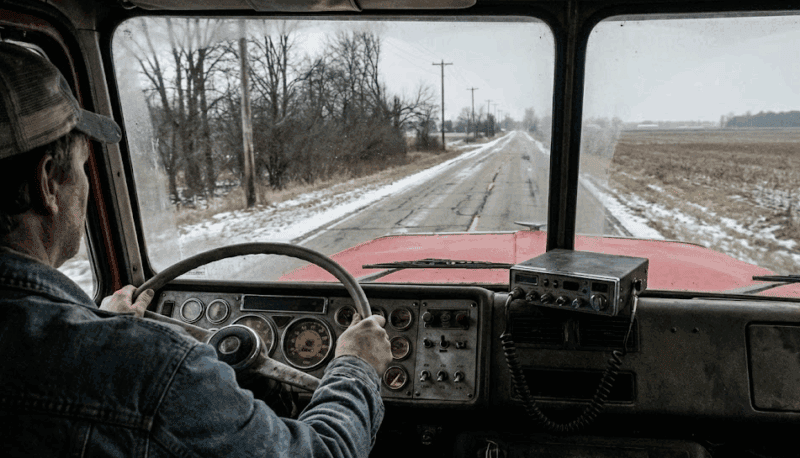
Big CB radios weren’t just equipment.
They were all about community, mentorship, fun and entertainment.
They taught drivers how to read the road, connect with each other and navigate the unknown roads.
That culture has long faded.
But the stories, friendships, and brotherhood created on those airwaves remain eternal.
For those who remember, the CB is more than much more than nostalgia.
The CB radio history is rich with memories for many drivers.
It’s a symbol of what trucking once was: challenging, dangerous, fun, commaraderie and life.
And for anyone who has ever keyed up a mic and heard that familiar crackle of voices, the memory hits harder than any modern gadget or app ever could.
“Once you’ve lived it, you know what you are missing. The CB era is gone, but it’ll never leave the heart of a trucker.”
“Hey, How ’bout that Westbound Chicken Truck… Yea, watch out for the Kojak with a Kodak at the 150 yardstick. My heater’s a glowin’ and my manners are showin’ . “