The Unwritten Code: What Truck Driver Manners Really Mean
There was a time when that title meant something…….
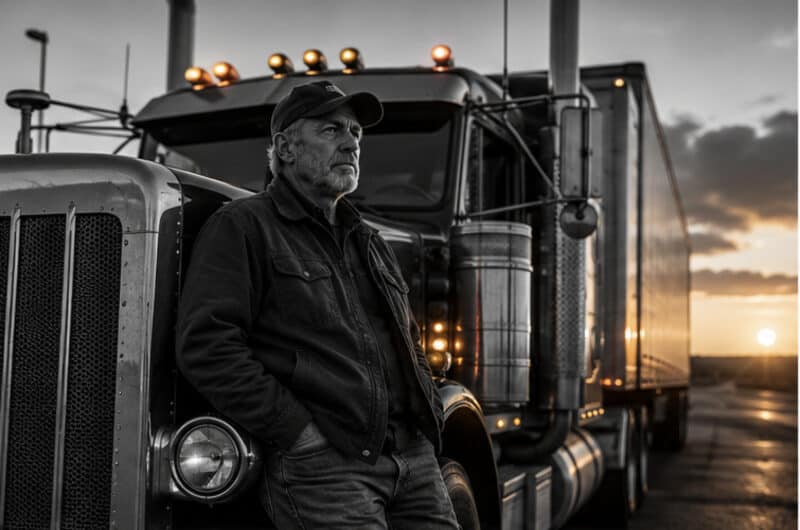
‘Gentleman of the Highway’.
It wasn’t a formal designation.
Nobody handed out certificates or pinned a badge on your chest. It was earned quietly out on the road: in the way a driver handled himself at the fuel island, in the passing lane, at the dock, and in every small moment where he could have been careless but chose not to be.
Other drivers recognized it. The public recognized it.
And the drivers who carried that title knew exactly what it meant and what it cost to keep it.
That code of ethics didn’t come from a driver’s manual.
It was passed down the way most real things worth knowing are: driver to driver, over the CB, at the truck stop counter, through years of watching how the old time truckers handled themselves and understanding without being told that this was how it was done.
It was the glue that held trucking together as a community, not just an industry.
But that chain now has pretty much broken up. And the cost of this loss it is bigger than most truck drivers want to admit.
Where It Went
It would be easy to point fingers at the new drivers and leave it at that. But, that’s not the whole story, and it isn’t fair.
The pressures on today’s driver are real.
- ELDs that run like a countdown clock.
- Shippers and receivers who want freight now, no exceptions, no grace.
- Rates that have been squeezed until the margin for error and patience is so razor thin.
- Parking shortages that push drivers onto ramps and shoulders to sleep because there simply isn’t a legal parking space within a 100 miles left.
- A truck population so massive that the old sense of the brotherhood gets swallowed up in the sheer volume of traffic.
The old school driver had room to breathe that today’s driver doesn’t have.
He could stop to help a motorist in need, chatter on the CB, take a few extra minutes without the clock turning it into a violation.
That world, sadly, is gone.
But here’s the part that matters: the pressure explains some of what’s been lost. But, it doesn’t excuse all of it. And it certainly doesn’t mean the code has to completely disappear.
Because the code was never really about having extra time or an easy schedule. It was about character. And character doesn’t clock out when the freight market gets tough.
Why It Matters More Than You Think
Here is the argument that doesn’t get made enough, so it’s going to be made plainly here.
Truck drivers, as a group, feel disrespected.
By the driving public that cuts them off on the interstates and then blames the truck.
By shippers who treat the truck like a waiting room and the driver like an afterthought.
By regulators who add more and more rules without understanding the reality of the road.
By the media who has been merciless.
And that frustration is legitimate. Every experienced driver knows it.
But respect doesn’t arrive from the outside in. It’s built from the inside out.
When a driver cuts off another truck in the passing lane, squeezes back in before he’s clear, and nearly clips the hood…… every four-wheeler behind him sees that.
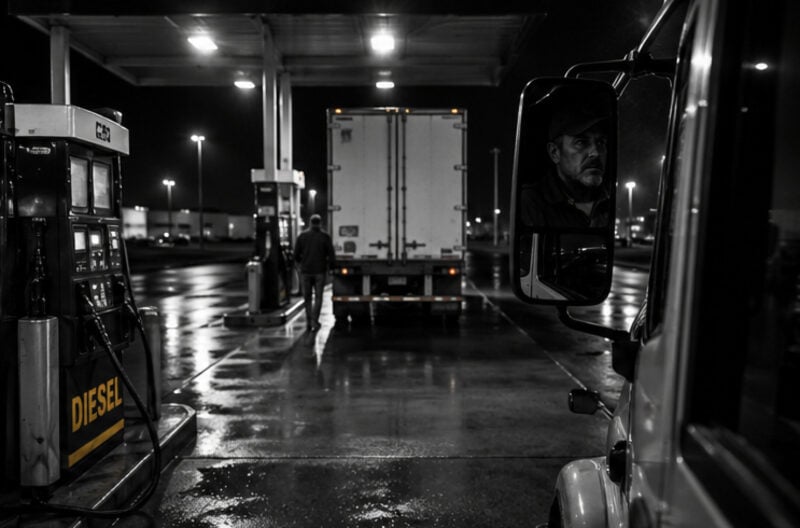
When a driver abandons his truck at the fuel island for 20 minutes while others line up behind him, every person at that truck stop forms an opinion.
When a driver blows up at the truck stop counter staff because his day went sideways, that becomes the story ‘somebody tells about truckers’.
The driving public already has its doubts.
And every act of carelessness or aggression inside the trucking community confirms those doubts. Every act of professionalism quietly pushes back against them.
If truck drivers want the public to see them as the skilled, essential professional workers they are (and they are), it starts with how they treat each other. Y
You cannot demand respect from the outside world while being careless with the people doing the same hard job beside you.
That’s not meant to be a lecture. That’s just how it works.
The Code in Practice
So what does the unwritten code actually look like in the real world? It isn’t complicated. And it never was.
At the fuel island: fuel and move on. The island exists for one purpose. If you need a shower, a meal, or 20 minutes inside, park the truck first. Other drivers are working the same clock you are, and leaving your truck planted at the pumps while you sit down for coffee is not a small inconvenience. It’s a statement that your time matters and theirs doesn’t. Professional drivers don’t make that statement.
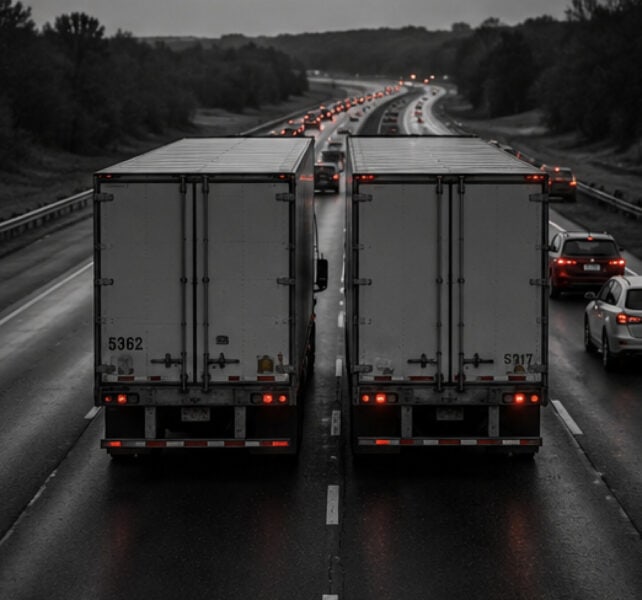
In the passing lane: if you can’t get by clean, don’t start the pass in the first place. A proper pass leaves a real safety buffer before you move back over. Cutting back in tight isn’t saving time, it’s gambling with somebody else’s safety for the sake of a few seconds. And the 2-truck crawl? Both trucks governed within a whiff of each other, blocking traffic for miles while neither one gains any ground… that’s not passing by any stretch of the imagination. Fall back, let it go, and get there in one piece. You’ll arrive at roughly the same time either way.
At the dock: you wait your turn. Watching for a moment to jump the line because you think the other driver isn’t paying attention isn’t being clever. Every driver in that yard sees it, and they remember. The same goes for the parking lot. Clean up after yourself. Leaving garbage in a truck stop lot or a Walmart parking area is a reflection on every driver who parks there after you.
With law enforcement: the roadside is not the place to make your stand. If an inspection feels unfair, if a ticket feels wrong, if a scale reading seems off, there are proper ways to challenge all of it….. A CAT scale receipt, a court date, a formal complaint. Those avenues exist and they do work. What doesn’t work is turning a roadside stop into a confrontation. Be polite, say thank you, and fight it later if you need to. That’s not weakness. That’s knowing how the game is played.
With your temper: keep it in your pocket. The pressure is real, nobody’s denying that. But the fuel island attendant didn’t cause your bad day, and the driver who took the last spot didn’t personally try to p*ss you off. Blowing up in public doesn’t make the problem smaller. It makes you the problem. Say your piece quietly if you have to say it at all, then walk away.
And the small things. Don’t let them disappear completely.
A flash of the hazards to thank the driver who gave you room.
A simple wave on the two-lane. An acknowledgment that the person in the other truck is doing the same hard job in the same hard conditions. It costs nothing and it means more than people realize.
A driver who notices the truck beside him is usually the same driver who leaves room, watches his mirrors, and doesn’t force someone into a bad spot.
Awareness and courtesy typically run side by side.
A Note to Newer Drivers
If you’re new to the trucking industry, some of this may not have been handed to you, and that’s worth saying out loud.
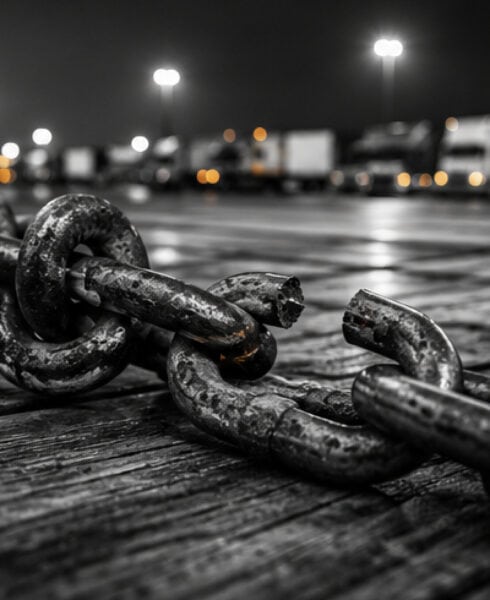
That old chain of transmission: veteran to rookie, over the radio, at the counter, doesn’t work the way it used to. Today’s trucking industry is too big, too fast, and too fragmented for that kind of mentoring to happen naturally anymore.
That means you may have come into trucking without anyone ever explaining that there’s a code.
I don’t mean the rules and regulations. Those get covered….the code underneath the regulations. The unwritten standard that separates a driver from a professional.
Now you know it exists.
The rest is up to you.
Bring the Title Back
‘The Gentleman of the Highway’ isn’t a relic. It’s a standard that the industry desperately needs, and one that individual drivers can choose to live by regardless of what the freight market is doing or what the ELD says.
It shows up in those small decisions made a hundred times a day.
How you handle the fuel island. How much room you leave after a pass. Whether you wait your turn or jump it. Whether you keep your cool or make a scene. Whether you acknowledge the driver beside you or treat him like nothing but an obstacle.
Those decisions, add up across thousands of drivers every single day, are what the public sees. They’re what shapes the image of the profession. And they’re what either holds this community together or quietly pulls it apart.
The road has enough problems already. The last thing trucking needs today is truckers adding to them.
Truck driver manners were never about being soft or sentimental.
They were about professionalism.
And professionalism is what separates a driver from someone who just holds a CDL. Be the professional this industry was built on.
The title is still worth earning