Peterbilt 379 vs Freightliner Cascadia: A Real Driver’s Honest Take
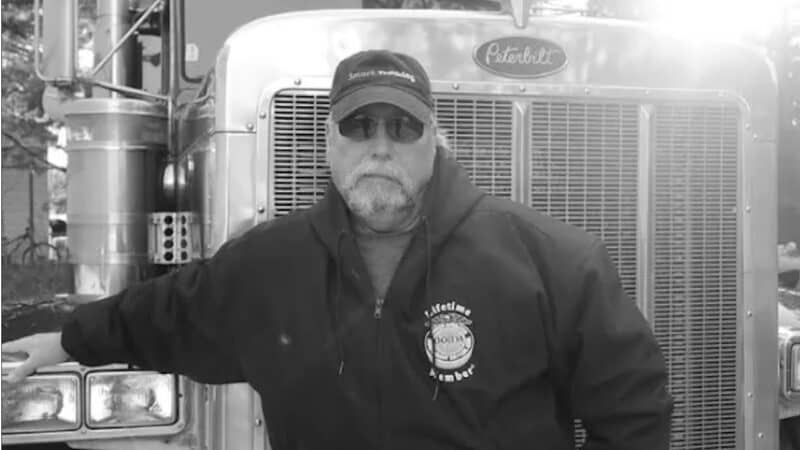
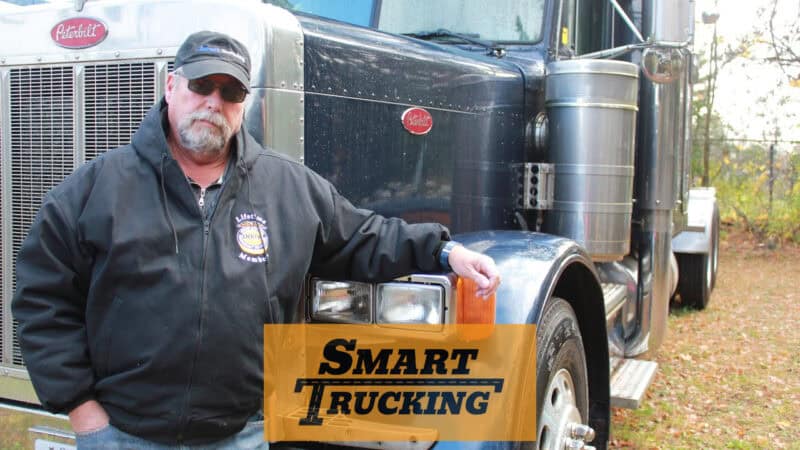
This piece is based on a video recorded by Dave, a veteran truck driver and longtime Voice of the Trucker of Smart Trucking, who passed away in late 2024. His words, his opinions, and his love for real trucks are preserved here exactly as he shared them.
“Some trucks feel like appliances. Some feel like trucks.”
Dave had driven long enough to know the difference the moment he climbed in.
So when he put a 2022 Freightliner Cascadia up against his own 2004 Peterbilt 379, he wasn’t running a test. He was having a conversation…..the kind only a driver with serious seat time can have with a piece of equipment.
What came out of it wasn’t a verdict. It was something more honest than that.
Peterbilt 379 vs Freightliner Cascadia: 2 Trucks Built For 2 Different Worlds
Right from the start, Dave was clear that this wasn’t an apples to apples comparison, and that was the whole point.
The Cascadia was a company truck.
His Pete was an owner-operator truck. Those 2 trucks weren’t built for the same driver, the same load, or the same life style.
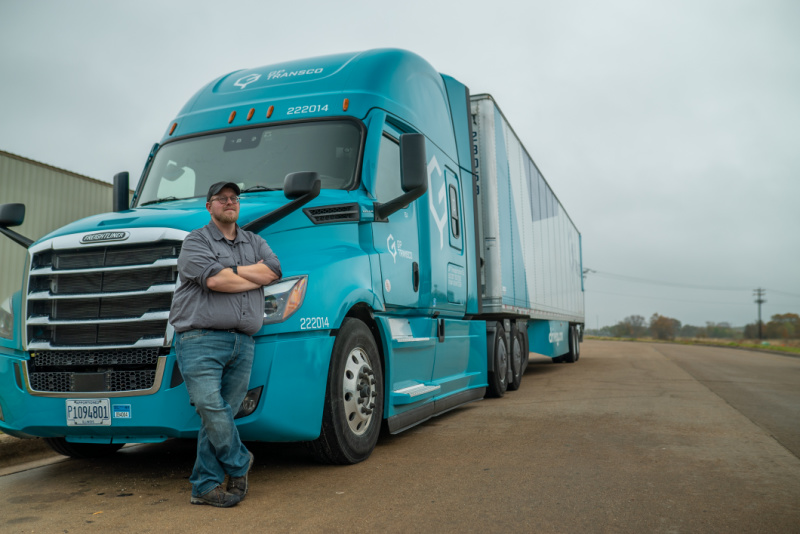
The Freightliner Cascadia is built around the trucking industry as it stands today.
- Fuel economy.
- Fleet efficiency.
- Tight drop yards.
- Getting a new driver down the road without too much drama.
It does all of that very well, but after all, that’s what it’s designed to do.
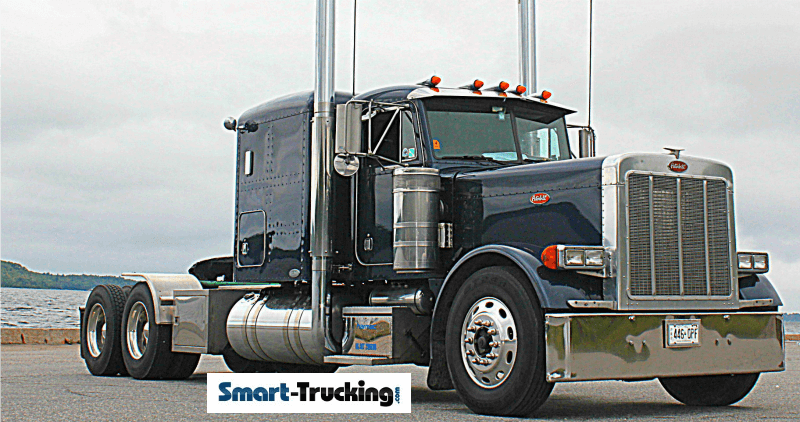
The Peterbilt 379 is built around the driver.
- Long hood.
- Long wheelbase.
- Manual transmission.
- It doesn’t try to filter the experience or manage it for you.
It just gives it to you straight and lets you as the driver, sort it out.
That gap is where everything interesting lives.
The Cab Tells You Something Before You Even Turn a Wheel
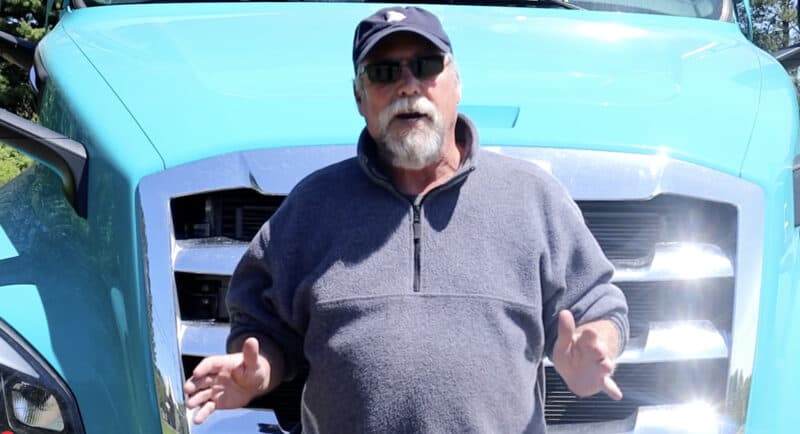
The Hood. Dave noticed the hood first…..he noticed the absence of one.
In his Pete, that long hood is part of how he places the truck on the road. On slick roads or in sketchy conditions, he watches the nose. It tells him if the front end is starting to walk or push. It’s a reference point so natural he stopped thinking about it years ago. Until it was gone.
The Cascadia’s drop-nose design really opens up the forward view.
More glass, cleaner sightlines, easier to see what’s ahead. Dave appreciated that.
But he’d be the first to tell you that better visibility and better orientation are 2 different things. Being close to the glass with nothing out front felt a little like stepping back into a cabover.
Your whole sense of where the truck sits on the road shifts, and for a driver who grew up on long-hood trucks, that shift takes some getting used to.
The Cab. The cab itself was tight and quiet. Compared to a Pete with straight pipes, the Cascadia felt buttoned up and pretty civil. No argument there.
The Ride. But then came the ride.
Dave preferred the Peterbilt 379 on that count, and it wasn’t just familiarity talking.
The Cascadia had a short wheelbase, and to him it felt like it was bouncing and bobbing all the time ….. his words were something close to “riding a basketball down the highway.”
The Pete, with that long 280″ wheelbase, just sat differently.
More grounded.
More settled.
The kind of steady that adds up over a long day in the saddle.
The Safety Systems That Didn’t Feel All That Safe
The Safety Devices. The Cascadia came loaded with driver safety aids. Lane departure warnings. Blind spot alerts. A full sensor package meant to watch your back.
Dave’s take was straightforward. He felft they were more distraction than help. Construction zones set them off.
Tar strips on the road could trigger warnings.
A system that’s crying wolf half the time trains you to tune it out, and once you’ve tuned it out, it isn’t doing much good.
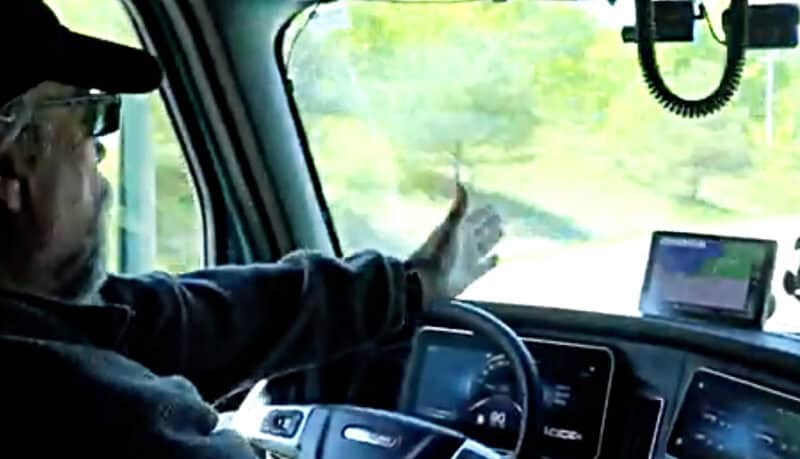
The sensor cluster mounted high on the windshield bothered him more than the alerts themselves. It cut into the upper view ….. the part of the glass where you catch stoplights and overhead signage.
That’s not a small thing when you’re moving a loaded truck through traffic.
The Bunk. This Cascadia didn’t have a bunk door on either side of the sleeper. Dave flagged that as a real safety concern. Older sleepers gave you a way out. Sometimes two especially in a rollover or bad situation.
Without one, your escape route in an emergency is the windshield. That’s a detail that sounds minor until you picture the truck on its side at 2 a.m.
Behind The Wheel: Where It Gets Personal
The Transmission. If one thing defined the Peterbilt 379 vs Freightliner Cascadia comparison, it was the transmission.
Dave had been throwing gears his entire driving career.
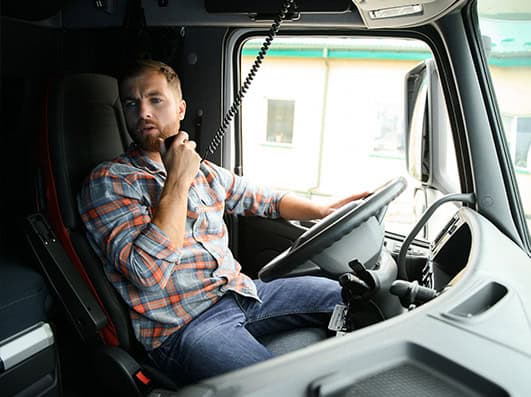
Climbing into an automatic felt strange. In fact, it was more than strange……it felt like the truck had opinions. It would choose a gear he wouldn’t have chosen.
It would hold when his instincts said shift, or shift when he wanted to hold. Every time it did something he didn’t expect, his hand would move toward a shifter that wasn’t there.
That happened more than once.
He was fair about it. For a new driver, an automatic is probably the right call.
Less to manage, fewer mistakes, less workload in traffic and on grades. For a fleet running new people through the seat, it makes sense.
But for a driver who’s built his whole feel for a truck around the manual…. the rhythm of it, the control of it, handing that off to software is a real adjustment. Maybe not one he ever would have made willingly.
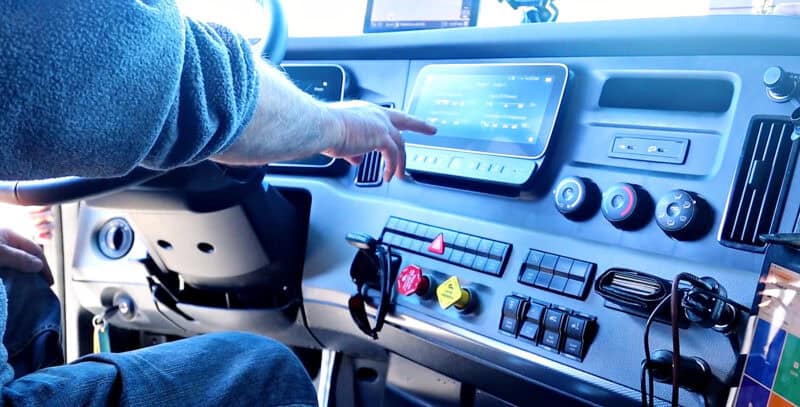
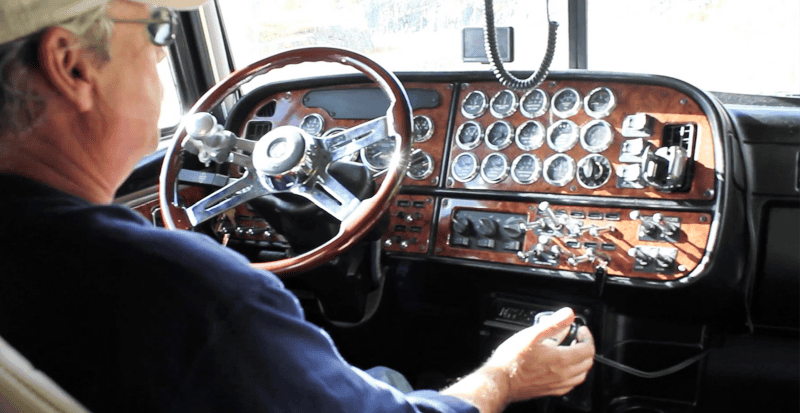
The Dash. The dash was another split. Dave’s gauges in the Peterbilt are right where they’ve always been. A glance tells the story. He doesn’t have to think about it.
The Cascadia’s digital display looked sharp, but getting a full read on everything meant switching screens. That meant eyes off the road, hunting through menus, looking for information that should just be sitting there.
Oil pressure, temps, air, volts: a driver should be scanning those constantly. When the dash makes that harder instead of easier, it’s a step in the wrong direction no matter how modern it looks.
The Engine Brake. The Jake brake on the Cascadia earned solid marks. 3 settings, came on strong and did what it was supposed to do.
The control layout around it was a different story. Dave’s trailer brake in the Pete is exactly where his hand expects it. Muscle memory built over years.
In the Cascadia, the Jake control lived on the shifter and the trailer brake had been moved to a small lever on the dash.
In a panic, you don’t rise to a new system. You go where your hand has gone a thousand times before.
Moving that control isn’t just inconvenient — for an older driver, it can be genuinely dangerous.
Out On The Road, The Score Gets Complicated
Maneuverabilty. The Cascadia won the tight quarters contest without a fight. Warehouses are tight. Docks are tight. Customer lots were never designed for long-wheelbase owner-operator trucks.
If you’re working in those environments every day, that maneuverability matters more than almost anything else.
You can love old iron all you want, but wrestling a long nose Pete into a space built for a short company truck gets old pretty fast.
Taking On the Hills. Then came the hills, and that’s where the Peterbilt 379 hit back hard.
Dave put his foot into it and the old truck pulled like a champ. He described it as pulling like ‘Jack the Bear’. If you’ve ever been behind the wheel of a strong pre-emissions truck with a properly spec’d engine, you know exactly what that means.
You ask and it answers. No hesitation, no calculation. Just power.
The Cascadia felt tuned for economy first. On the grades, it felt weak by comparison.
Dave called it a fuel squeezer.. and that showed up when he needed the truck to dig in.
That’s not a flaw so much as a design choice. Today’s trucks are built to save fuel and manage emissions, and they do that job very well.
But having confidence on a long grade under load is a different thing entirely and the Pete had it in a way the Cascadia did not.
The Ownership Question
Dave made one point that a lot of experienced drivers will recognize immediately.
He wouldn’t want to keep the Cascadia past the end of its warranty.
That’s not a comment on build quality. It’s a comment on complexity.
The more electronics, sensors, and gadgets a truck carries, the more the math changes once the warranty has run out.
Modern trucks can be excellent machines when they’re brand new. But when something goes wrong in a system that requires a dealer scanning tool and a software update to diagnose the problem, the whole picture changes fast.
Old iron has its own costs.
Nobody who runs an older model Peterbilt 379 is not delusional and knows that.
But the complexity is different. For a driver who can do alot of his own mechanical work, a mechanical truck with fewer electronic gadgets is a different kind of ownership than a late-model truck that can surprise you with expensive fixes that you can’t troubleshoot yourself.
So Which Truck Wins?
Well, it depends on who’s asking the question.
For a New Driver. Put a new driver in a truck, and the Freightliner Cascadia is the easy answer. It’s quieter, cleaner, easier to manage, and the automatic takes a real load off someone still learning to drive. For a company fleet or a driver training program, for day cab work in tight spots, it’s pretty hard to argue with.
For an Experienced Driver. Ask an experienced driver which truck he’d rather climb into for a long run, and the answer changes. Dave was plain about it. If he had to head for the coast tomorrow, he was taking the Peterbilt. No question.
The gearshift. The hood out front. The long wheelbase and the way it sits on the road. The sound. The pull. The feeling that the truck is doing what you told it to do.
The Freightliner Cascadia is the truck that fits into today’s trucking. The Peterbilt 379 is the truck that fits a certain kind of driver….. the kind who learned the job when the truck felt like something you actually drove, not something you managed.
That’s why old school trucks still have a hold on the drivers who know them.
The old iron may not be the practical choice anymore. But they’re still good trucks. And for the drivers who grew up driving them, they always will be.
For more real-world driver content and equipment talk, visit Smart-Trucking.com.