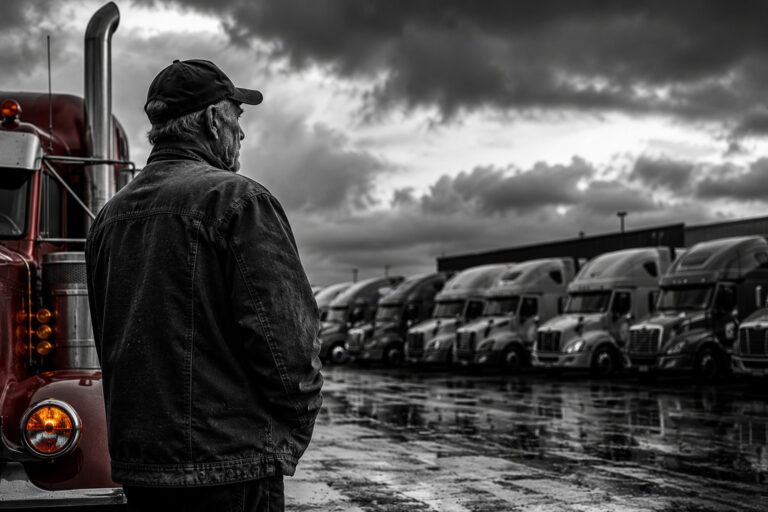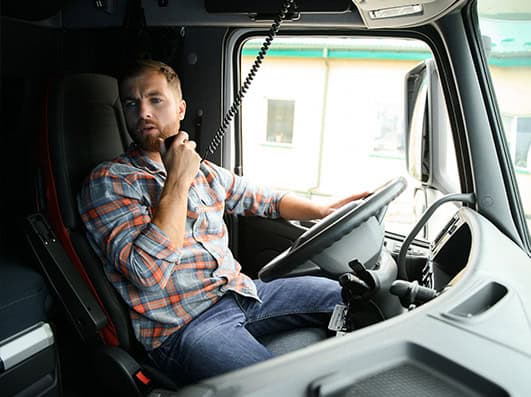
Why Truck Driving Is Not Unskilled Labour
Calling truck driving unskilled labour misses the point by a country mile.
Truck driving is not unskilled labour.
It is high-responsibility work that demands judgment, awareness, and experience long before the wheels even start turning. And long after the truck is parked.
The dangers of truck driving don’t show up in just one place either.
They show up everywhere… at the dock, in traffic, in bad weather, in unfamiliar cities, and especially in the legal aftermath when something goes wrong.
According to the U.S. Bureau of Labour Statistics, truck drivers consistently rank among the jobs with the greatest number of fatal work injuries, with transportation incidents being the leading cause of death on the job. We’re not talking, ‘theoretical risk’ here. It’s the reality of the job that reflects just how demanding and dangerous the work can be.
What looks like a simple job to an ‘onlooker’ is anything but.
The “Unskilled” Label Gets the Job Completely Wrong
The idea that trucking is entry-level work and that “anyone can do it” is one of the most common myths in the industry.
That belief works out pretty nicely when it comes to cost-cutting. But, it doesn’t match the true reality of the job.
A professional truck driver is responsible for an 80,000 lb vehicle moving along on public highways, tight industrial areas, unpredictable heavy traffic, and constantly changing weather conditions.
What people outside the industry often miss is the gap between driving a truck and managing risk in a truck all day long.
Yes, a CDL gets someone started.
But, it does not create judgment, patience, precision timing, or the ability to read developing problems before they turn into something ugly.
That part only comes with experience.
Docks, Yards, and Heavy Equipment Are Where Reality Shows Up Fast
Most people think the danger starts on the highway.
It doesn’t.
Some of the most serious risks in trucking happen before the truck even leaves the yard.
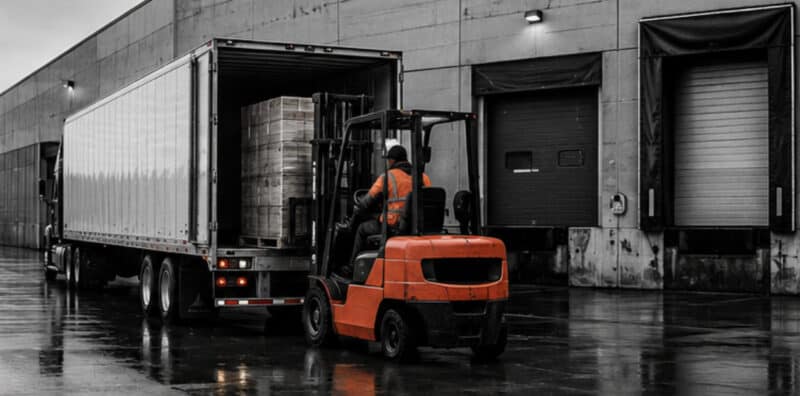
Loading docks, ports, warehouse yards, and tight receiver lots are controlled chaos……..steel, movement, blind spots, and people all operating in the same small space can be an industrial recipe for disaster.
Forklifts reverse with limited visibility. Trailers shift under weight. Freight moves unexpectedly. One mistake doesn’t just slow things down……it can end in serious injury. Fast.
This is where perception and reality split.
From the outside, looking in, it just looks like loading freight.
From the inside, it’s continual risk management.
Even the everyday tasks carry real consequences:
- slipping on ice in a trailer drop yard or a loading dock
- climbing into and on equipment when surfaces are wet or icy
- being hit by equipment during the loading or unloading process
- unstable freight shifting without warning
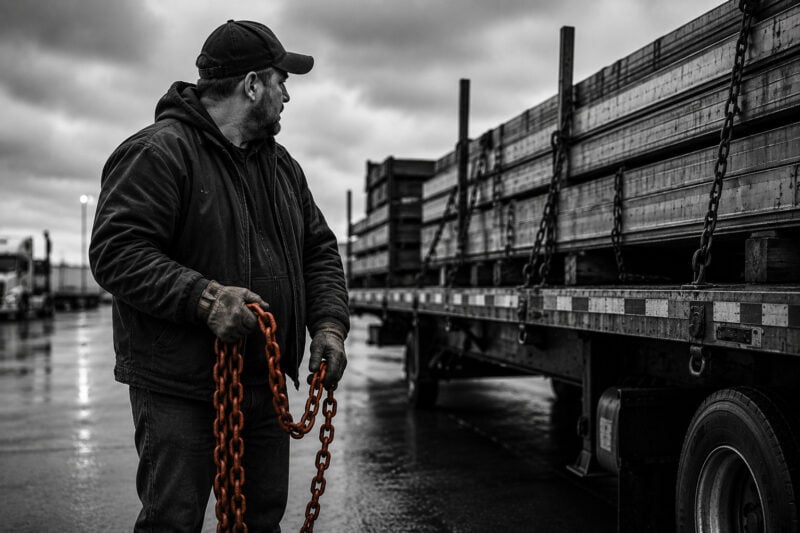
Flatbed and port work push that risk even further, where tarps, chains, and overhead lifting equipment add pressure on top of already tight margins for error.
Nothing about it is passive.
You’re in the middle of the action at all times.
Sometimes the Hardest Part Is Getting There
But not all the all risk and dangers happen at the dock.
Sometimes the most dangerous part of the job is the route leading into it.
There’s a difference between a delivery location on paper and the reality of reaching it in a truck and trailer loaded up to 80,000 lb through a snowstorm.
Old industrial districts, tight city areas, and early-morning appointments often put drivers into areas that were never designed for modern day freight moves.
Yes, the expectation is very simple. Just get there on time.
But, the reality is much more complicated:
- narrow streets with no margin for error
- poor lighting and low visibility
- unpredictable pedestrian activity
- tight turns that leave no room to correct
From the outside looking in, it’s just navigation.
From the seat of the truck, it’s constant calculation.
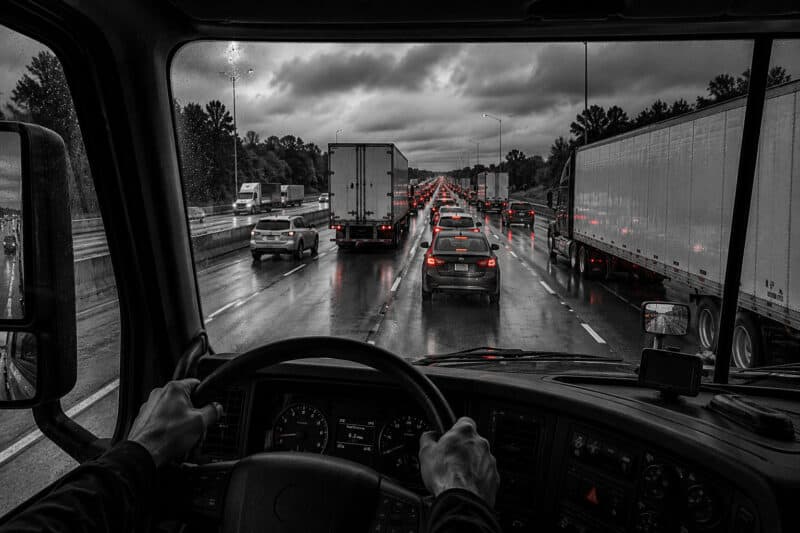
Weather Doesn’t Just Add Difficulty: It Changes the Entire Job
Weather doesn’t make trucking harder. It changes what the job is in that moment.
Snow, fog, high winds, freezing rain, black ice, and whiteouts reduce control while increasing consequences.
At the same time, traffic doesn’t always slow down with it.
That mismatch is where things can go terribly wrong.
In bad weather, a driver is managing everything at once:
- reduced traction
- limited visibility
- longer stopping distances
- and public traffic behaving like nothing has changed
This is where experience shows itself clearly. Not in perfect conditions, but in unstable ones.
When visibility drops or traction disappears, small decisions matter a lot more than people realize.
And sometimes, they decide everything.
Parking Shortages Create Pressure Most People Don’t See
Truck parking is often treated like a scheduling inconvenience.
It isn’t. It’s a safety issue that builds pressure into every decision a driver makes when on the road.
When safe parking disappears, drivers are forced into a narrowing window:
keep pushing forward or risk stopping in unsafe conditions.
That decision doesn’t stay theoretical. It plays out in real time, often at the end of a long day when fatigue is already taking its toll.
Over time, that pressure affects:
- reaction time
- judgment quality
- stress levels
- and long-term health
This is where trucking stops being just a driving job and becomes a endurance and decision-making job all at the same time.
Liability Tends to Land on the Driver First
In trucking, responsibility often gets laid out before all the facts are even known.
Even when another vehicle causes the incident, the truck is usually the first thing scrutinized.
That’s not perception. That’s just the process in trucking.
It’s also why dash cams have become essential. They don’t just record incidents. They protect against assumption.
Because in real situations, it’s often not about what happened….it’s about what can be proven quickly.
And beyond crashes, equipment issues can still circle back to the driver through inspection, even when the defect wasn’t realistically detectable beforehand.
That creates a constant layer of accountability most outside the industry don’t see.
Some Freight Demands More Skill Than Others
Not all trucking carries the same level of risk.
Flatbed, tanker, hazmat, and heavy haul work bring about even more complexity:
- load shifting
- rollover risk
- chemical exposure
- loading procedures under pressure
The more variables involved, the more judgment is required in real time.
Training provides a foundation. But it’s experience is what fills in the gaps when the situation do longer matches up what was learned in the classroom.
That gap is where real skill is built.
What It All Comes Down To
If a job can injure you in the yard, put you at risk in unfamiliar environments, beat the crap out of you in extreme weather, slowly wear down your health, and still leave you carrying the blame when something goes wrong, it is not unskilled labour.
Truck driving is high-responsibility work that demands judgment, awareness, and experience earned over time. It’s not handed out in a classroom.
Because the reality of this job isn’t just about moving freight.
It’s about managing risk in real time, in places that don’t forgive mistakes, under conditions that don’t stay the same for very long.
And doing it all over again the next day.
Where People Get It Wrong
The biggest misconception most people have about a truck driving job isn’t that trucking is easy.
It’s believing it can be judged by people who have never actually done it.
This isn’t a job you understand from the outside looking in.
It’s long hours, constant pressure, and responsibility that doesn’t pause just because someone has an opinion. Until you’ve lived it, your perspective is just that…..an opinion, not reality.