Trucking 2026: Canada’s Safety & Sustainability Shift
As Canada moves toward 2026, the trucking industry stands at a critical inflection point.
After years of fragmented training standards, uneven enforcement, and mounting public concern over safety, momentum is building for long-overdue reform.
What was once discussed quietly in boardrooms and industry meetings is now coming to the forefront: training, accountability, and professionalism are becoming non-negotiable.
The coming year will not be defined by technology alone, but by a cultural shift—one that places competence, compliance, and safety at the core of commercial transportation.

Red Seal Certification: From Advocacy to National Conversation
One of the most significant developments shaping the future of trucking is the growing advocacy for Red Seal Certification for Commercial Drivers.
Once considered aspirational, the concept is now gaining traction across provinces, industry associations, and safety professionals.
Red Seal certification represents more than a credential. It signals:
- Standardized national competency
- Apprenticeship-style training
- Transferability across provinces
- Recognition of truck driving as a skilled trade
In 2026, the conversation is no longer whether commercial driving should be treated as a skilled trade, but how quickly Canada can align its training systems to support it. Provinces are under increasing pressure to harmonize testing, improve oversight of training schools, and ensure that licensing reflects real-world competence—not just minimum seat time.
Training Enforcement Tightens Nationwide
The era of loosely regulated training models is coming to an end.
Across Canada, regulators are tightening enforcement around:
- Entry-level driver training
- Instructor qualifications
- Curriculum consistency
- Verification of practical, on-road experience
This shift is being driven by collision data, public scrutiny, and pressure from insurance companies.
Training is no longer viewed as a checkbox—it is being recognized as the foundation of public safety.
Expect 2026 to bring stricter audits, fewer “rubber-stamp” programs, and increased consequences for training providers that fail to meet expectations.
Carrier Compliance Moves to the Forefront
Carriers will also feel pressure in 2026, as enforcement efforts increasingly target organizational responsibility, rather than just individual drivers.
Key areas of focus include:
- English language proficiency
- Driver qualification files
- Safety management systems
- Proper use of independent contractor models
- Hours-of-service compliance
- Drug and alcohol program adherence
The message from regulators is clear: compliance is a leadership responsibility. Companies that rely on loopholes, misclassification, or weak oversight will find it increasingly challenging to operate undetected.
Market Correction: Rates Rise as Illegitimate Carriers Exit
As enforcement strengthens, the national carrier pool is beginning to rebalance.
Illegitimate and chronically non-compliant operators—those undercutting rates through unsafe or unlawful practices—are slowly being removed from the system. While this transition creates short-term discomfort, it signals a healthier industry ahead.
As capacity stabilizes:
- Freight rates are expected to rise modestly
- Professional carriers gain operational stability
- Investment in training and safety becomes economically viable
- Drivers benefit from improved wages and working conditions
In 2026, higher standards are not a cost burden—they are a market correction.
Trucking Costs Shift as Equipment Markets Cool
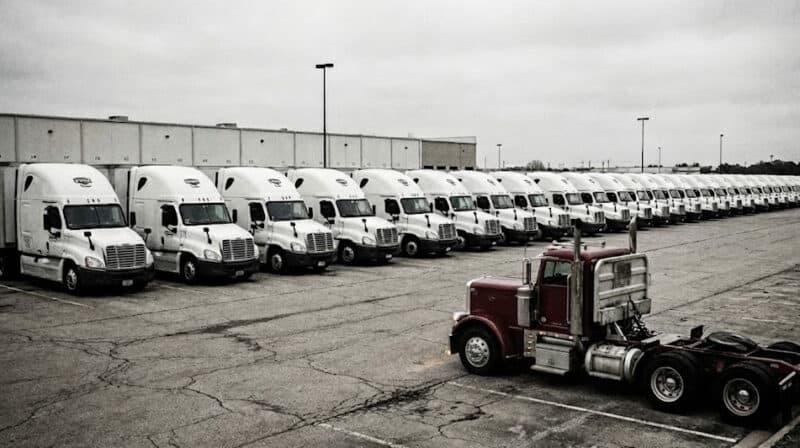
While some costs will continue to pose challenges to carriers, others are expected to ease.
Demand for new trucks is projected to soften as fleets extend replacement cycles and manufacturers face a more competitive market. This may result in:
- Reduced new-truck pricing pressure
- Increased incentives and financing competition
- Greater availability of late-model used equipment
At the same time, emissions-free and alternative-fuel platforms will take center stage. Manufacturers will continue scrambling to balance affordability, regulatory compliance, and innovation as electric, hydrogen, and low-emission technologies mature.
For carriers, 2026 will be less about rapid fleet expansion and more about strategic, long-term equipment planning.
Public Awareness Brings Truck Safety to the Forefront
Public awareness around truck safety is increasing rapidly. Media coverage, roadside enforcement visibility, and post-incident scrutiny are reshaping the industry’s perception.
Canadians are asking more challenging questions:
- Who trained this driver?
- Was the carrier compliant?
- Are licensing standards adequate?
- Why are expectations lower than in other skilled trades?
While this scrutiny brings pressure, it also presents an opportunity. An informed public is more likely to support professional drivers and responsible carriers who demonstrate competence and accountability.
A Changing Workforce: Opportunity and Responsibility
For those currently in the trucking industry—or considering a career in it—the future holds significant opportunities.
As the industry evolves, it is also becoming more inclusive. Women are entering trucking in greater numbers, bringing new perspectives and strengthening the workforce. With this positive change comes responsibility.
In 2026 and beyond, the industry must take meaningful steps to:
- Prevent harassment and discrimination
- Improve terminal, yard, and rest-area security
- Expand access to safe services and amenities
- Build respectful, professional workplace cultures
A sustainable trucking industry must be one where everyone can work safely, with dignity and respect.
A Stressed Industry Steps Into the Spotlight
The trucking industry has long carried the economy quietly. In 2026, it will carry something else: expectations.
Expectations for:
- Better training
- Stronger oversight
- Fair enforcement
- National consistency
- Recognition of trucking as a true profession
Those who adapt early—by investing in people, compliance, and culture—will lead the industry forward. ThosJohn who resist change will struggle in a tightening regulatory environment.
Looking Ahead
2026 will not be the year everything is fixed—but it may be the year Canada decisively changes direction.
Red Seal advocacy, standardized testing, market correction, enforcement reform, and public accountability are aligning in ways not seen in decades. The result will be fewer shortcuts, fewer tragedies, and a stronger, more respected profession.
For carriers, drivers, and policymakers alike, the path forward is clear:
Raise the bar—or be left behind.
Article by : John DeGroot, CSM
John is a Safety Advocate, Senior Safety and Compliance Manager with over 35 years of professionally representing the trucking industry as a driver, owner-operator and trainer.