Why Unqualified Truck Drivers Are Still Getting on Ontario Roads
Ontario says commercial truck drivers must complete mandatory truck driver training before getting a licence.
But an investigation involving hidden cameras, internal suspicions and industry feedback raised some questions about whether proper standards are being followed in the process.
An investigation by CBC, brought into light, many concerns around Ontario’s truck driver training system, their testing practices, and oversight inside Ontario’s commercial licensing process.
The investigation took place about 18 months ago, but the same issues this investigation brought to center stage are still not resolved.
And that matters.
Because once a driver has their ‘official license’ and headed down the road, there’s no turning back. It’s potential for catastrophe.

Yet The Training System Was Meant to ‘Raise the Standards’
Ontario’s Mandatory Entry-Level Training program (MELT) was brought about to standardize commercial truck driver training in Ontario.
Drivers are supposed to complete over 100+ hours of instruction before taking their road test. The training is to cover inspections, air brakes, backing up, and basic road safety.
On paper, it seems like a pretty solid system.
But this investigation discovered that some of these training schools aren’t exactly following the recommended training program.
Some training programs were apparently offering cut rates, expedited programs and fewer than required number of training hours.
The bottom line creates a problem where not every driver going through training in Ontario is getting the ‘same level of training’.
Real Training or Test Prep?
Instead of training including a complete range of truck driver skills, some of the instruction is geared to just passing the ‘road test’.
That means students could spend more time on specific yard maneuvers and less time on real-world driving situations like highways, weather, traffic pressure, and emergency decisions.
So the goal switches to ‘passing the road test’ from being ready to be independent behind the wheel, and able to deal with any situation that comes along.
When Training Falls Apart, It Follows the Driver
One of the students in the investigation described a situation where he had a minimal number of instruction hours, very little supervision and unsafe conditions during his training.
He also said the school shut down before he had even completed his training program.
However, the records showed him as a fully trained under Ontario’s truck driver training system.
He later had to pay for his driver training a second time at another school to get the training he should have.
So this raises a serious basic issue.
When someone is recorded as being trained in the Ontario truck driver licensing system, that record follows them….. even if the training wasn’t complete.
Related > Truckers Aren’t Welcome in Ontario
Testing and Enforcement Concerns
The investigation brought to light ‘corruption inside the testing system’…. pretty serious business.
One of the more experienced examiners said other examiners were taking bribes to pass drivers who should not have received a commercial licence.
She said…..
“These people took bribes, gave licenses for a murder weapon.”
Definitely harsh words, but there’s no mistaking the point being made here. A tractor-trailer in the hands of someone who isn’t properly trained can become very dangerous ….very fast.
The examiner interviewed also mention the uncomfortable pressure around the number of trainees who passed the training and the number of trainees who failed. If too many trainees failed the testing, the examiners job could be in jeopardy.
So here we have a system where trainers are more concerned about ‘stats and numbers’ than safety. And that’s where some trainees get a ‘pass’ who should truly have ‘failed’ the testing.
The System Hasn’t Been Corrected. Yet.
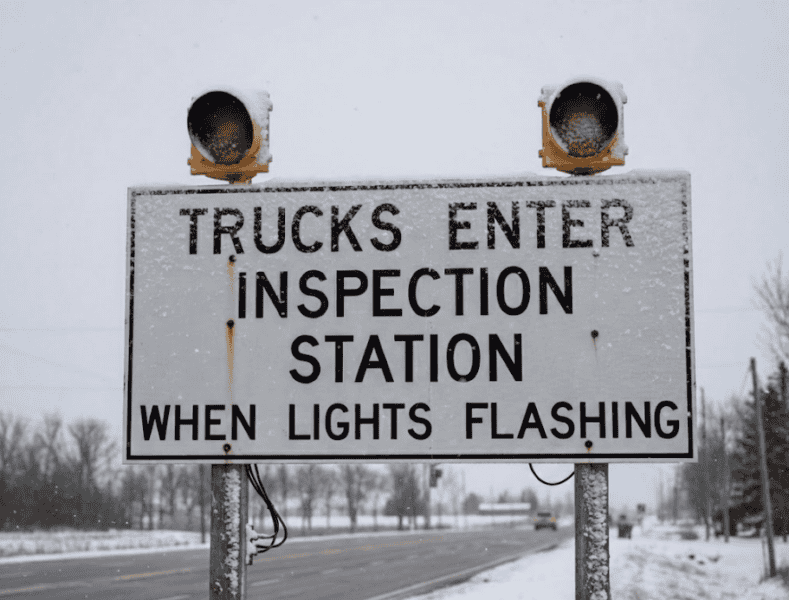
In 2025, Ontario gave an extension to the truck training schools to fully comply with MELT lesson plan requirements, to July 1, 2026.
The move upset a lot of trucking schools that had already spent time and money getting their programs up to the new standards.
Their argument was simple.
Training schools that followed the rules are being forced to wait while schools that dragged their feet are being given even more time.
Some officials in the trucking industry say that keeps the weak training programs alive longer than they should be.
And that’s why there’s still frustration over whether Ontario is actually cracking down hard enough on bad training schools.
The Impact Shows Up on The Road
These problems don’t stay inside the training schools in Ontario.
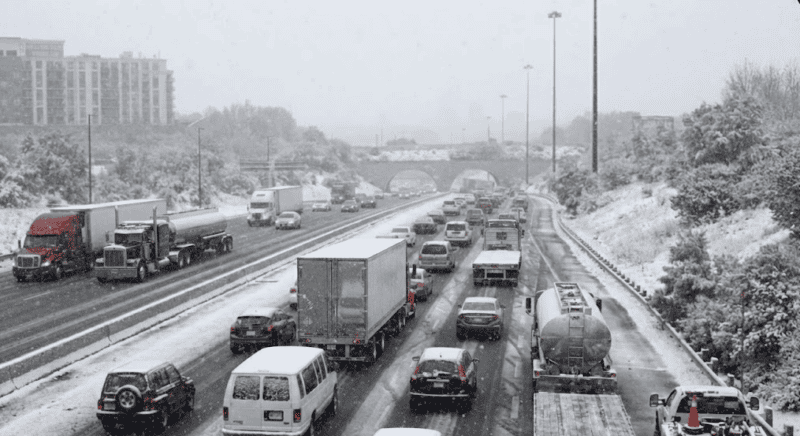
Truck drivers across Ontario say they’re seeing more and more inexperienced drivers on the road who simply can’t do the job.
Experienced drivers have are seeing things like poor lane control, following too close, bad backing skills, and drivers struggling in traffic or bad weather.
Clearly, there are increasing numbers of new truck drivers getting a Class A license before they’ve earned it.

We Can’t Forget The Humboldt Crash
Every Canadian remembers the horrific Humboldt bus crash.
16 people were killed after a tractor-trailer truck blew through a stop sign and slammed into a bus carrying a junior hockey team.
That tragedy changed how many people in Canada look at truck safety. It showed just how devastating the outcome can be when something goes wrong with a commercial vehicle.
Not Every School or Company Cuts Corners
Not all schools or fleets operate the same way.
Some use simulators and have structured training within the commercial truck driver training in Ontario so drivers are able to experience real-world conditions in a controlled environment. It can be a great learning tool.
There are some companies that rely heavily on tracking systems after hiring to monitor behaviour like speeding, harsh braking, and unsafe driving.
In many cases, trucking companies say they are left trying to fix issues that should have been ironed out during the training program.
The Real Issue
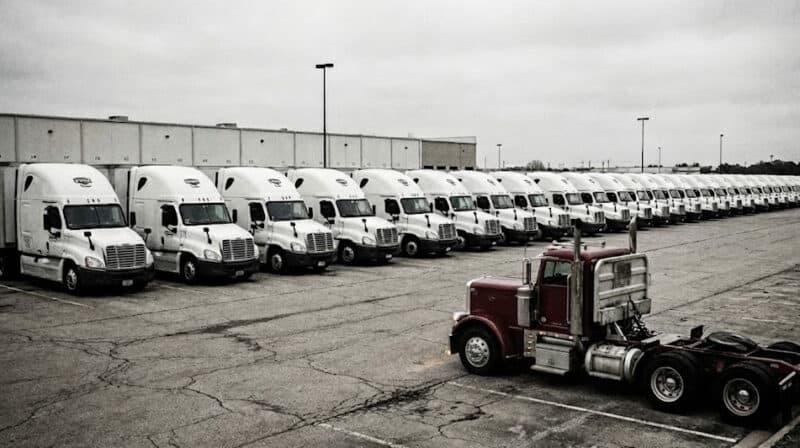
This story isn’t really about one bad school or one dishonest examiner.
It’s about a system that was supposed to improve truck driver training in Ontario and whether those standards are actually being enforced the way they should be province wide.
Because when some schools follow the rules while others cut corners, and stringent enforcement keeps getting pushed aside, people start wondering just how many drivers are getting licensed before they’re truly ready to get behind the wheel.
This isn’t just a paperwork issue or about politics. It’s about 80,000+ lb trucks, piloted by unqualified truck drivers, on the road with families, commuters and other truck drivers every single day.
And that’s why this issue keeps coming back up.
Not because people want to attack the trucking industry……but because they want to know the drivers behind the wheel have actually been trained properly before they hit the highway. And that’s not a big ask.
And until people stop seeing incompetent drivers, weak enforcement, and stories about drivers slipping through the cracks, this concern isn’t going away.
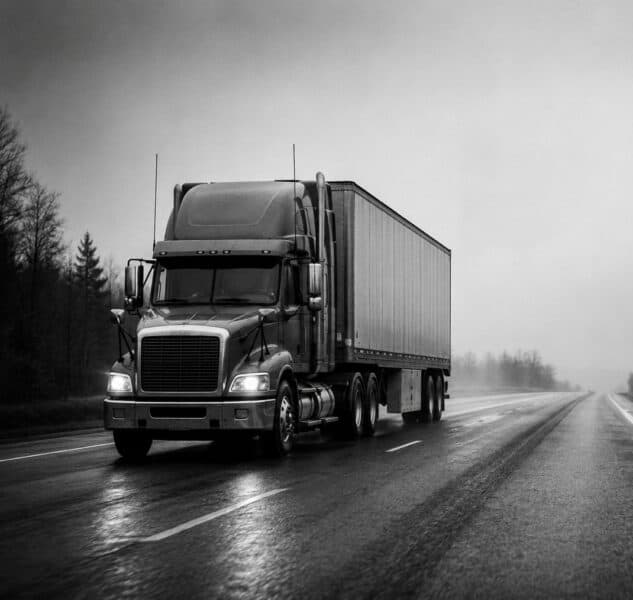
Because when an 80,000 lb truck and trailer is involved in a crash, the consequences aren’t minor.
They’re most often, deadly.
And here’s the part that doesn’t get talked about enough.
Think about the drivers who actually did it right. Maybe you’re one of them.
The ones who spent the money. Put in the hours. Sat through proper training. Learned how to handle real-world situations, not just how to pass a road test. The ones who take this job seriously because they understand what’s at stake every time that truck rolls.
Now imagine how they feel watching drivers show up beside them who clearly didn’t get the same level of preparation. And yet somehow they ended up with the same licence, the same responsibility, and the same 80,000 lb truck.
It’s not hard to see why that would rub a lot of professional drivers the wrong way.
Because this job isn’t supposed to be a shortcut.
And when the system treats it like one, the people who actually respect the work are the ones left carrying the weight of it.
At the end of the day….
This isn’t just about one investigation or one province.
It’s about whether the standards that are supposed to protect everyone on the road are actually being enforced consistently across the board…….and what happens when they aren’t.
If you’ve been in the trucking industry long enough, you already know the answer shows up on the road.