The Industry That Forgot Its Drivers
There was a time when decisions in trucking started with the driver.
Decisions around truck choices weren’t made by analyzing spreadsheets.
Nor from fuel economy.
Nor fleet fuel economy averages.
It was the drivers that mattered in how the trucks were spec’d…
- how smooth the ride was
- ease of use
- and how they held up over the long haul.
Life on the road was never easy for the truck driver but the equipment at least was spec’ed then to reflect a certain degree of comfort and appeal to the drivers.
But, over time, that perspective shifted.
This happened slowly at first, then the pace picked up at lightning speed.
- Fuel costs rose.
- Margins tightened.
- Fleets grew larger.
And somewhere in that transition, trucking stopped building trucks with the driver in mind and started building them around cost.
That shift is still shaping everything that happens in trucking today.

From Cabovers to Conventionals…. When Practicality Ruled
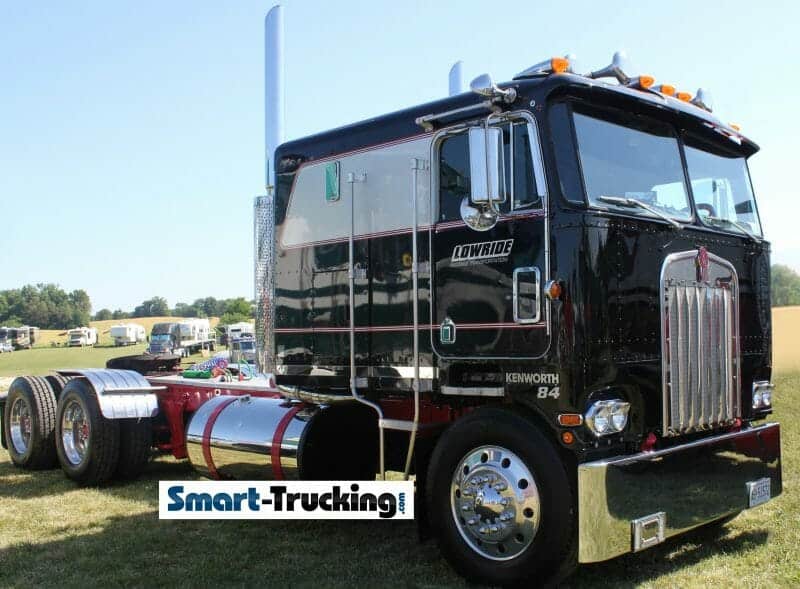
Early trucking looked very different from today.
Cabovers existed for one main reason: length regulations.
They were compact, functional, and necessary under the rules of the day.
But cabovers came with trade-offs…. they weren’t very comfortable, they were tiring to bounce around in and the space between the driver and their wasn’t much space between the road and the driver.
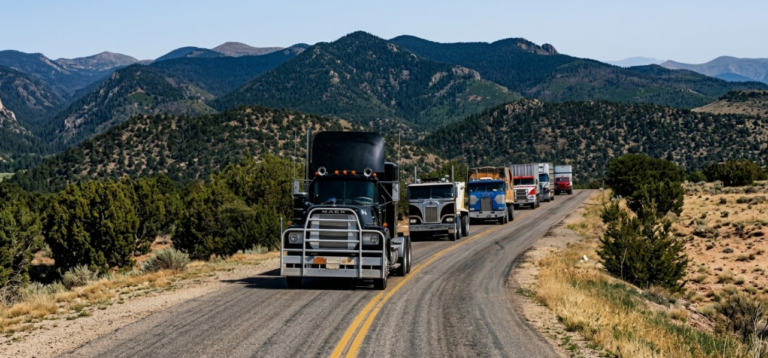
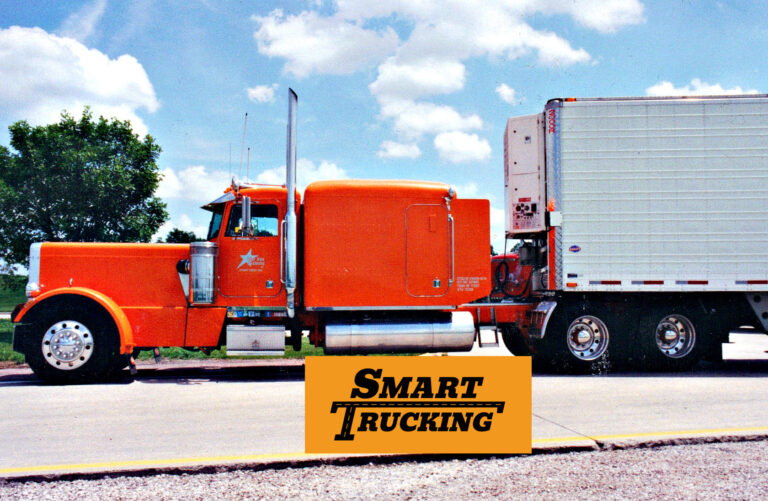
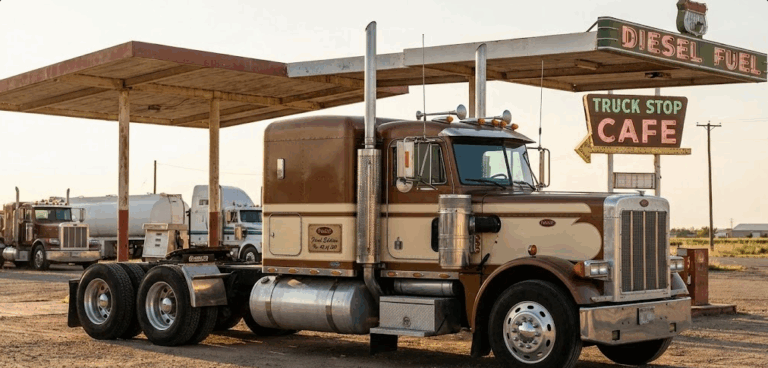
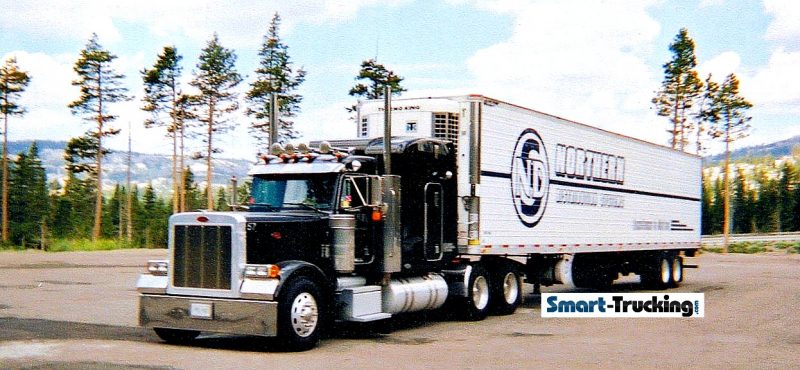
When length laws changed and longer combinations were allowed, the long hoods took over.
It wasn’t intended as a styling decision. It was for practicality.
There was more room for the driver in the cab, the ride was smoother.
And for the first time, those hoods were a real buffer between the driver and the road.
Then Fuel Economy Became the Priority
The next major shift had nothing to do with what the drivers wanted.
The next big shift was ‘fuel’.
As operating costs climbed, fuel efficiency became one of the biggest factors in profitability in trucking.
Truck design also followed that pressure.
Aerodynamics mattered more than looks.
The ‘hoods’ dropped, the shape became more ‘swoopy’ in the name of aerodynamics. Every decision about truck design and specs were based around saving fuel.
The look of the truck certainly changed as did the decision making process behinbd it.
Trucks were designed because they matched up to the numbers. Driver comfort and appeal were a non-issue.
What Changed Inside the Cab
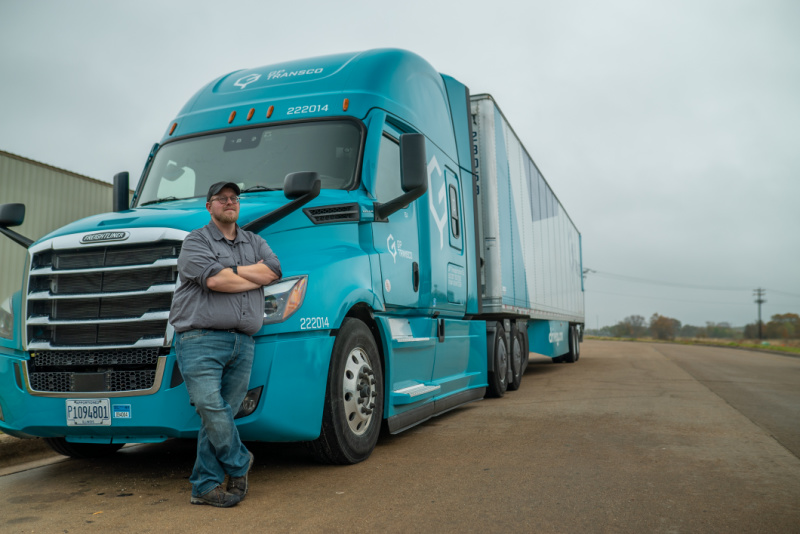
Modern trucks are more efficient, more standardized, and easier to operate than the older trucks.
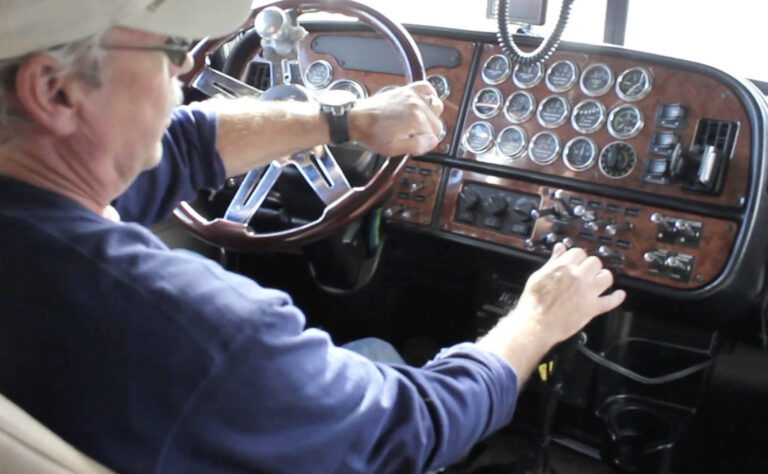
The interiors became more generic and less durable.
Longevity wasn’t so important. But controlling costs was.
Trucks were becoming more like disposable and ‘managed’ assets.
Even the driving experience shifted.
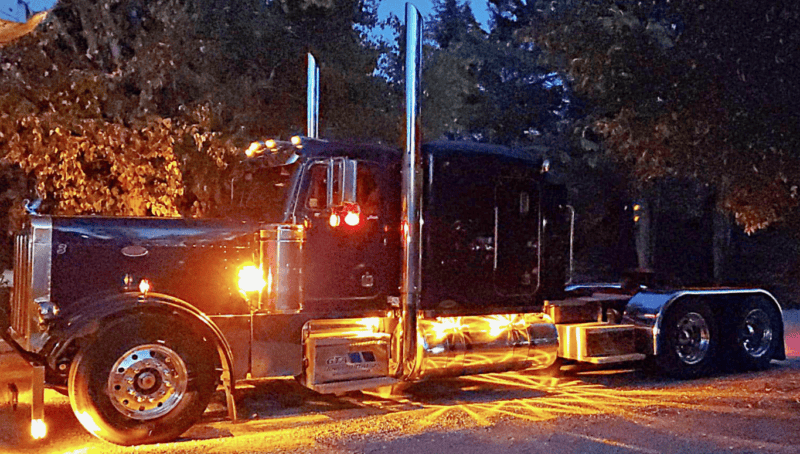
The older long hood trucks gave drivers a sense of space and reference points out in front of the vehicle.
The truck felt grounded in a different way. It had presence.
The modern truck designs prioritize visibility, aerodynamics, and maneuverability.
But the feel behind the wheel is much different.

The Business Behind the Wheel Changed Everything
It wasn’t just truck design that changed.
There was also a deeper shift in the freight economy itself.
Shippers gained leverage.
Mega-carriers expanded and grabbed up the volume of freight.
The freight rates tightened.
The profit margins shrank.
….And when that happens, the decisions become simpler….the cost/mile, fuel economy and time on the road are the things that ‘drive’ those decisions.
All the other factors move to the bottom of the list…… and standardization moves to the top of the list.
Driver preference didn’t disappear.
It just stopped being a top priority.
The Impact on Drivers
The equipment is only part of the story.
Over time, truck driving jobs changed.
Electronic logs, tighter scheduling, faster turnarounds, and more intense scrutiny changed the ‘rhythm of driving a truck’.
There is less downtime.
There is less actual interaction with the drivers. (lack of human interaction)
There’s a much faster pace for life on the road for the truck driver.
So when you hear drivers talk about older trucks, they’re often not just talking about the trucks. They’re talking about what the job used to feel like.
Modern Trucks Still Matter
It wouldn’t be a true statement to say that nothing improved in the newer trucks.
Modern trucks are more fuel efficient, safer in many conditions, and easier to operate for new drivers, just starting out.
Automation has reduced fatigue in shifting.
For tight docks, city deliveries and high-volume companies, the modern trucks really do make sense.
Progress solved many problems.
But it also came with trade-offs.
Where Trucking Stands Now
Trucking today sits between two competing realities.
On one side there is efficiency, cost control, and massive logistics systems built to keep freight moving in an industry where the profit margins are razor thin.
On the other side is the driver experience. Or what’s left of it.
Driver comfort, the pride, and the basic sense that the person behind the wheel still matters.
And that’s the part that shouldn’t be ignored.
It’s the drivers…..the ones out there keeping those wheels turning night and day and who still keep it all moving.
The trucking industry didn’t just change. It just left its drivers behind.