Monfort Lane Secrets: How Legendary I‑80 Trucks Made History
Long stretches of Interstate 80, sun bouncing off polished chrome, and a deep, steady rumble in the distance.
Then suddenly, it’s everywhere.
A Monfort truck appears in the left lane, another follows, and just like that, the highway feels alive.
For drivers in the 70’s and 80’s, this wasn’t just ordinary traffic.
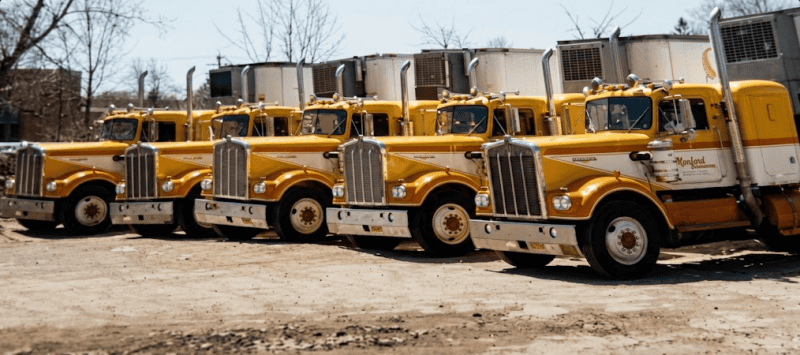
It was a gang of what became legendary trucks that ‘owned’ the hammer lane…… it was dubbed ‘The Monfort Lane’, a stretch where trucks, drivers, and skill came together in a rhythm only a veteran truck driver would recognize.
You could feel it before you saw it…… the hum of Cummins and Caterpillar engines, the pride in every polished chrome bumper, the confidence of drivers who knew exactly what their rigs could do.
According to company records and veteran drivers, these legendary trucks on I‑80 ran long hauls with precision and minimal downtime, creating a legend that still sparks I‑80 trucking stories decades later.
But what really made them legendary?
Was it horsepower, driver skill, or the way the whole operation moved like a machine?
We pull back the curtain and uncover the Monfort Lane secrets.
The trucks, the people, and the moments in time that turned a stretch of I‑80 into something unforgettable.
Why I‑80 Became the Monfort Lane
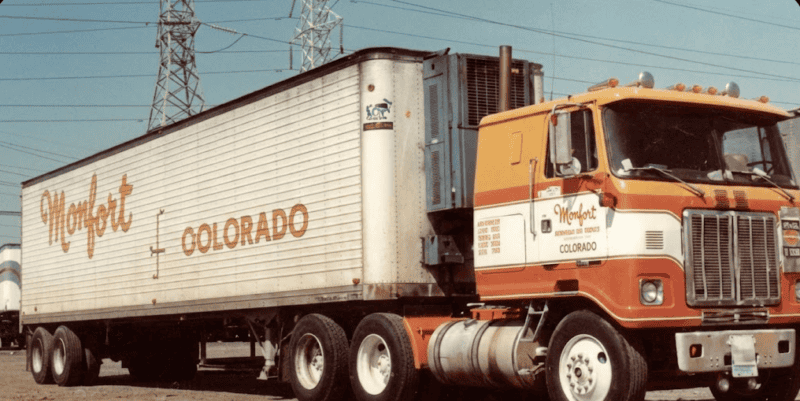
Greeley, Colorado was home to Monfort, a meatpacking and livestock empire built on speed, precision, and endurance.
Their fresh product had to move fast, and their trucks were the lifeblood of the operation. Monfort ran other highways, but I‑80 was where the legend unfolded.
The long, straight stretches, very few stops, and open visibility made it perfect for these long hood trucks to keep a rhythm and dominate the interstate.
Many drivers of the ‘day’, remember seeing these trucks, over and over, in the left lane, often in pairs or convoys.
There was a rhythm, a sense of inevitability.
These trucks weren’t just moving freight. They were making a statement.
It wasn’t about reckless speed. It was about never stopping
And that’s what left an impression that still lingers today.
Monfort’s operations were meticulously planned. Routes, driver rotations, and schedules made sure that Monfort Lane trucks stayed rolling with minimal downtime, making the Monfort Lane more than just asphalt. It became a living memory of trucking’s glory days.
For more on the original Monfort legend, check out our first post:
Trucks That Built the Legend
These weren’t just ordinary trucks.
Kenworth W900 and W925 tractors, paired with Cummins NTC and Caterpillar 3408 engines, were designed for endurance. Extra fuel tanks minimized stops, while carefully chosen gearing allowed for smooth, consistent movement across long stretches of interstate.
They didn’t need to “outrun” anyone. They just ran relentlessly, and that’s exactly what they did.
Veteran driver Mike “Bulldog” recalls:
“I remember one hauling beef from Greeley to Omaha….. left at midnight, right lane empty, left lane Monfort. You didn’t pass it, you just watched it glide past. It was like watching a predator patrol its territory.”
Jesse Walker adds:
“Those trucks weren’t just metal and engines; they were confidence on wheels. You knew that thing would get you there, no matter what.”
The combination of skilled drivers, reliable Monfort Lane trucks, and relentless scheduling made the fleet appear unstoppable.
It wasn’t magic. It was precision, planning, and pride.
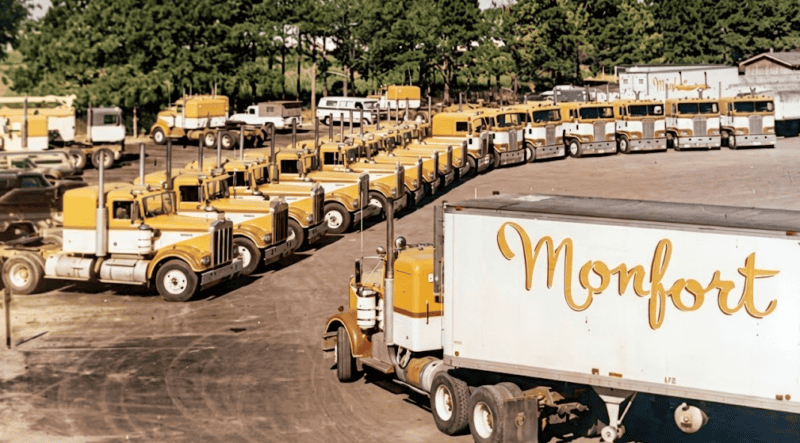
The Monfort Drivers Who Made the Lane Legendary
The trucks were impressive, but It was the drivers that made the Monfort Lane legendary.
Team drivers swapped seats through the night to keep freight rolling, often covering hundreds of miles with minimal sleep. It wasn’t just endurance, but skill, intuition, and a deep respect for the machine.
CB chatter hummed across the airwaves, truck stops echoed with whispered stories, and every left-lane pass left a lasting impression.
Drivers knew that seeing a Monfort Lane truck meant witnessing precision in motion, but also witnessing the pride and the intense focus of the drivers behind the wheel.
“Owning the left lane wasn’t bragging — it was respect. Everyone knew a Monfort rig meant business, and the driver behind the wheel deserved it.” — Frank “Redline” Hernandez
Some of the Monfort drivers were veterans, some rookies, but all shared the same code: respect the rig, respect the route, and never cut corners. It was a bond between driver and machine that went beyond logistics.
And it wasn’t all serious business. The drivers shared jokes, swapped stories, and created memories that outlived the trucks themselves.
Seeing one of these legendary trucks on I‑80 pass in the distance wasn’t just witnessing freight on route. It was experiencing a moving symbol of pride, skill, and the human spirit.
“Those nights on I‑80… you weren’t just moving product. You were part of something bigger. The rumble, the chrome, the teamwork — it stuck with you.” — ‘Big Daddy’ (Handle)
The human factor…….the endurance, the camaraderie among drivers, the unspoken pride. This is what turned Monfort from a trucking company into a legend.
Without these drivers, the left lane would have been just been another ribbon of asphalt. With them, it became the Monfort Lane.
Why The Monfort Trucks ‘Seemed’ Unstoppable
Monfort trucks didn’t have to be the fastest.
They were relentless, consistent, and impeccably maintained.
Route planning was highly efficient and driver rotations meant trucks ran mile after mile without downtime.
Witnesses remember these trucks travelling at a high rate of speed, but in reality, it was truly precision and endurance in action!
“It wasn’t about passing cars — it was the feeling of control, confidence, and dominance. You felt it in your chest before you even saw it.” — “The Hammer” Jerry R. Thompson
That was the secret: the Monfort Lane worked because of system and skill, not reckless power.
These I‑80 trucking stories remind us why veteran drivers still talk about these trucks today.
Spec Sheet — A Typical Monfort Rig
| Feature | Detail |
|---|---|
| Model | Kenworth W900 / W925 |
| Engine | Cummins NTC / Caterpillar 3408 |
| Horsepower | 350–425 hp (approximate) |
| Transmission | 10–13 speed manual |
| Fuel Capacity | 200–250 gallons (dual tanks) |
| Max Load | ~80,000 lbs GVW |
| Special Notes | Optimized for long hauls, durability, minimal downtime |
The Legacy of the Monfort Lane
It’s the memories that linger……… the awe when a Monfort Lane truck cruised past, the steady rumble, the sense that you were witnessing something bigger than the road.
That was the magic of the Monfort Lane: trucks, drivers, and routes coming together to create legendary moments.
Compare it to today: governed engines, ELDs, and strict regulations.
Modern fleets are safer, no doubt but the raw pride of those rhythmic runs is long gone.
But, the Monfort Lane reminds drivers of a time when skill, endurance, and freedom defined the highway, and why those stories still resonate decades later.
“Even today, the memory of a Monfort Lane truck rolling down I‑80 lingers in the minds of those who saw it — the steady rumble, the polished chrome, the quiet confidence of a driver in complete control. These weren’t just trucks; they were moving symbols of skill, pride, and a golden era of trucking that turned a simple stretch of highway into legend. On I‑80, the Monfort Lane lives on — in every veteran trucker’s story, every whispered memory, and every left-lane pass that still commands respect.”