Truck Drivers and Law Enforcement: Scales, Stops, Tickets, and Roadside Reality
If you’ve spent enough years behind the wheel, you already know one simple truth that doesn’t change no matter where you run.
Once those flashing lights come on behind you or you’re rolling into a scale house, the conversation isn’t really a conversation anymore.
At that point, things are set in motion.
You gotta deal with what’s in front of you, and whatever comes after gets sorted out later. That’s if it gets sorted at all.
And most drivers figure this out soon enough. You don’t win anything on the shoulder of a highway.
You might have a case later. You might not. But right there on the side of the road, the only thing you can really control is how the interaction goes.
How Truck Enforcement Differs Between Canada and the United States
One of the first things any driver learns is that enforcement isn’t a single, consistent system.
It changes depending on jurisdiction, region, and even who happens to be working that day.
In Canada, enforcement might mean RCMP, provincial police, or Ministry of Transportation officers depending on the province.
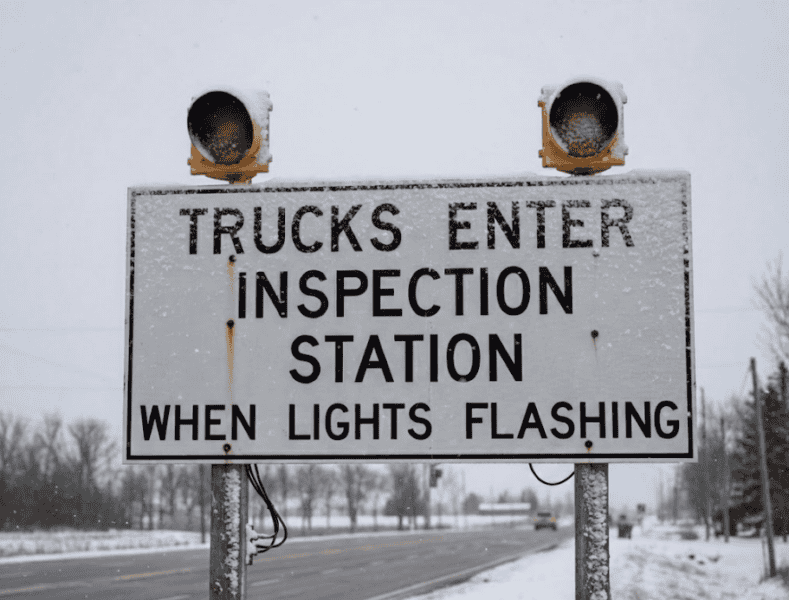
In the fine province of Ontario, MTO officers are a regular presence around scales and roadside inspections.
In the United States, state troopers are often the most visible presence around trucking enforcement, especially near weigh stations. In some areas, sheriff’s departments and DOT officers also play a role, but it varies widely from state to state.
The important part isn’t memorizing who enforces what. It’s understanding that the experience can feel completely different depending on where you are.
And drivers notice that quickly.
Why Some States Have a Reputation at Truck Scales
Every experienced truck driver builds a mental map of places where you don’t get careless…. there’s no room for error.
Ohio is one of those places that comes up often. It has a long-standing reputation for strict enforcement, especially around speed and compliance. Precision matters there.
California has its own reputation. Certain corridors and scales are known for detailed inspections and close attention to equipment.
Places like Mojave and Banning Scales are often mentioned by drivers not because every experience is negative, but because enough of them are memorable to stick.
Michigan also gets attention, especially around entry points like I-94, where drivers often describe feeling watched closely right after crossing in.
Oregon adds another layer entirely with their chain laws and mountain routes.
Utah is known for catching issues that other states may have let slide. For example, this involved a driver who passed through several states without issue, only to be stopped later in Utah for being overweight. The frustration wasn’t just the ticket…..it was more about the inconsistency between jurisdictions.
That’s the reality.
What passes in one place doesn’t always pass in the next.
Why Roadside Stops Are Not the Place to Argue
If there’s one rule that holds up across many, many years of driving, it’s this…… the side of the road is not the place to argue your case.
Remember, you’re dealing with immediate authority, and that changes everything about how the current situation plays out.
If there’s a disagreement, it gets handled later. Court is where arguments belong….not the shoulder of a highway. Picking an argument with law enforcement can be a really stupid move.
That understanding alone will save your butt, most every time, at least from making matters worse.
When Trucking Tickets Feel Fair and When They Don’t
There’s a difference between clear violations and technical ones.
Speeding, missed scales, and chain violations are straightforward.
Other situations feel more situational…..minor equipment issues, small weight differences, paperwork errors, or things corrected on the spot that still result in a citation.
Drivers tend to recognize that difference even when enforcement doesn’t always reflect it.
And that’s where frustration usually comes from. It’s not the rules themselves, but how rigidly they can be applied in real time!
Why Heavy Haul and Specialized Drivers Get More Attention
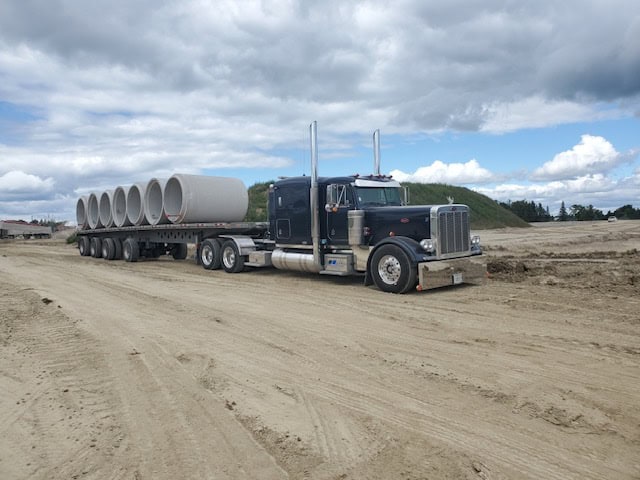
Drivers running heavy haul, oversize, or flatbed already know they operate under increased scrutiny.
There’s more to inspect…..permits, securement, axle weights, routing and that increases the chance of being stopped.
In practice, that means more checks and more opportunities for small issues to become real official violations.
Experienced drivers don’t see that as unusual. They just see it as part of the job.
And predictability, even in enforcement, becomes something drivers learn to value.
How Training Gaps Lead to Roadside Problems
A lot of what shows up at scales doesn’t start there. It starts earlier, in training.
Some new drivers enter the industry without a solid grounding in practical fundamentals, like hooking up properly, understanding routes, or knowing how enforcement varies between regions.
When those basics are missing, mistakes are made.
And once enforcement gets involved, those gaps become obvious fast!
Experienced drivers tend to recognize this pattern over time because it repeats way more than it should.
What Experienced Truck Drivers Do to Avoid Trouble With Law Enforcement
After everything is said and done, most experienced drivers come back to a few simple realities.
Most enforcement encounters don’t start with bad luck.
They start with something preventable.
- speed
- equipment
- paperwork
- weight distribution
- or knowledge about how different areas enforce the rules
And over time, the approach becomes less about reacting and more about avoiding unnecessary exposure altogether.
- Don’t assume another state’s officers will ignore what the last state ignored.
- Treat every scale and roadside stop as if it will be thorough.
- Keep equipment, lights, and paperwork clean before hitting the road.
- Watch aftermarket equipment like tint, extra lights, colored lenses, and bug screens.
- Avoid arguing roadside. Handle disputes later in the right place.
- Never rely on “they let me slide last time” way of thinking.
- Understand that even small technical issues can still become violations.
- Check trailer height, especially before entering cities or older industrial areas.
- Distribute weight properly, even on loads that are awkward or annoying to spread out.
- Respect chain laws, because “I made it to the top” isn’t a legal defense.
None of that is complicated. The hard part is consistency.
Most drivers don’t get into trouble from one big mistake. It’s usually small assumptions that line up at the wrong time.
And that’s what years on the road eventually teach you—how to stay out of unnecessary situations before they start.
That doesn’t mean you’ll never get stopped. It just means you stop being surprised when you do.